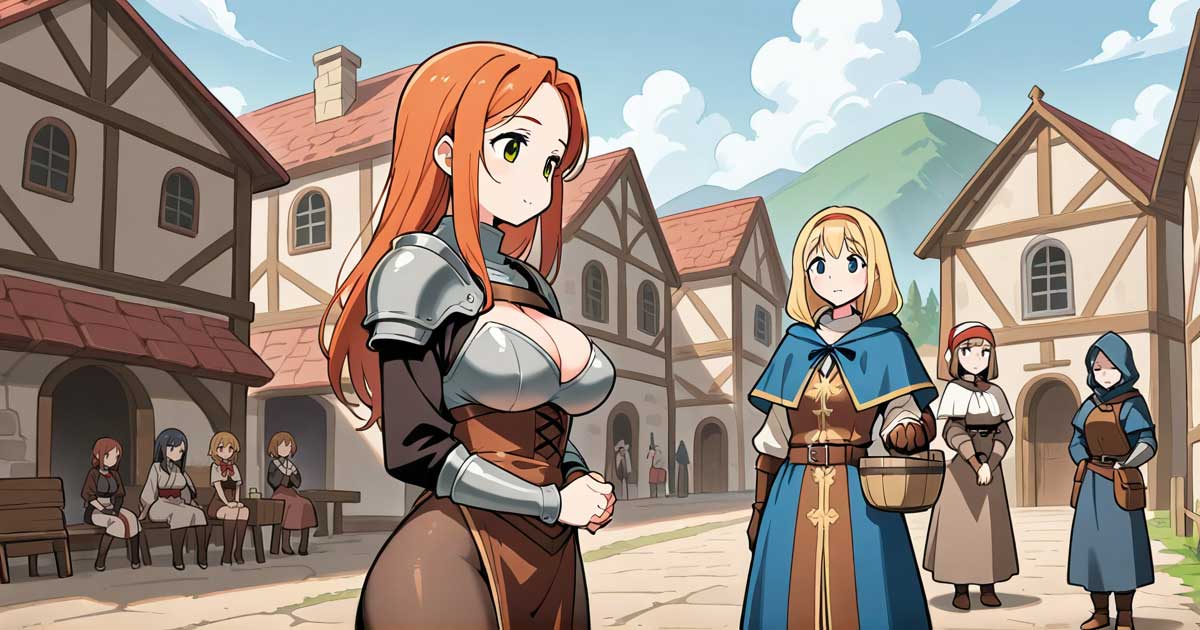

Medieval fantasy — Medieval worlds blending adventure, magic, and imagination.
Medieval fantasy immediately evokes a familiar yet evocative imagery: ancient kingdoms, fortified cities, dangerous roads, discreet guilds, and forgotten knowledge. It is a setting where adventure often begins at a crossroads, in a smoke-filled tavern, or under the shadow of a power too old to be openly challenged. Far from being static, this framework functions above all as a narrative playground.
Within this type of world, the rules are tangible and embodied. Institutions have faces, traditions carry history, and each region follows its own customs. This structure gives stories their weight and credibility: characters do not move through an abstract backdrop, but through a world that responds to their decisions. Travel, learning, and encounters become central elements of the narrative experience.
When present, magic plays an integral role in this balance. Rather than serving as a mere spectacle, it is woven into culture, belief systems, and power structures. Carefully handled, it enriches the setting without undermining it, strengthening the coherence of the story—especially when worldbuilding is approached as a living, interconnected whole.
Medieval fantasy also lends itself naturally to character growth. Whether through initiation journeys, progressive quests, or confrontation with a vast fantasy world, this framework encourages narratives where discovery, wonder, and progression move hand in hand. The adventure becomes both external and internal, shaping the characters as much as the world around them.
This section brings together articles devoted to medieval fantasy, its narrative codes, its variations, and its creative potential. The texts gathered here explore world construction, character development, and writing choices that give this genre its enduring appeal and immersive power.
-

Why I Chose to Write an Isekai
Reader frustrations, authorial choice, and an assumed narrative framework Introduction — Why isekai naturally imposed itself I did not choose to write an isekai because it was fashionable.It imposed itself on me as the most natural response to my frustrations as a reader and to my ambitions as an author. Before writing, I spent a…
-
Worldbuilding: Building a Coherent Universe Without Explaining Everything — Rules, Margins, and Invisible Decisions
Worldbuilding is one of the pillars of a coherent universe in fantasy and isekai. Building a believable world does not mean explaining everything, but establishing structuring rules, a stable internal logic, and invisible decisions that can support the story over time. In this article, I am not describing a specific universe. I am presenting a…
-

Michihiro Ikemizu
In the garden of Okinawa, family and press were gathered.A new record was about to be broken. Everything had been carefully prepared.The ground had been cleared with precision.The concrete blocks were aligned, their edges sharp, their surfaces still intact. Michihiro Ikemizu knew their density, their resistance, the exact way they would give under impact.His body…