
Artificial intelligence — Tools, critical perspective, and evolving writing practices
Artificial intelligence is often framed as a tool: one more button, a shortcut, a promise of speed. Yet, in an author’s practice, it rarely behaves like a simple convenience. It functions more like a technical mirror, immediately reflecting an uncomfortable question: what, in my writing, comes from intention… and what was merely habit?
When writing fantasy—and even more so progression-driven narratives—authors rely on invisible mechanics: scene rhythm, information density, emotional pacing, and cause-and-effect logic. Used properly, AI does not write in your place; it highlights these mechanisms. It brings narrative consistency into focus, exposes repetitions, weakens rushed transitions, and reveals where instinct replaced deliberate choice.
What matters most is posture. AI is neither an arbiter nor an automatic co-author: it is a mobile workshop, a tireless reader, a generator of hypotheses. It can help test variations, refine narrative writing, strengthen a transition, or verify pacing—without ever replacing the author’s voice. The final decisions—tone, implication, tension, restraint—remain profoundly human.
This section brings together articles that explore artificial intelligence as both a practical lever and a creative constraint: how to integrate it without diluting a personal voice, how to use it to structure, revise, or clarify a text, and how to let it interact with concepts such as immersion, worldbuilding, or light novel style, while keeping one priority intact—the reading experience.
-
Common Mistakes When Writing an Isekai
Writing an isekai often feels deceptively easy. The genre is codified, popular, and extensively explored. Many beginner writers are drawn to it thinking that following a few formulas is enough to produce an effective story. In reality, it is precisely this apparent accessibility that makes it a particularly demanding field. The most common mistakes do…
-
WordPress Security for Independent Authors
How Invisible Attacks Can Destroy Your Visibility Without You Knowing This article is intended for independent authors who manage their own websites.It is not written for IT specialists, but for creators who need to understand the real risks and the concrete actions required to protect their work. Like the sitemap—often seen as a minor technical…
-
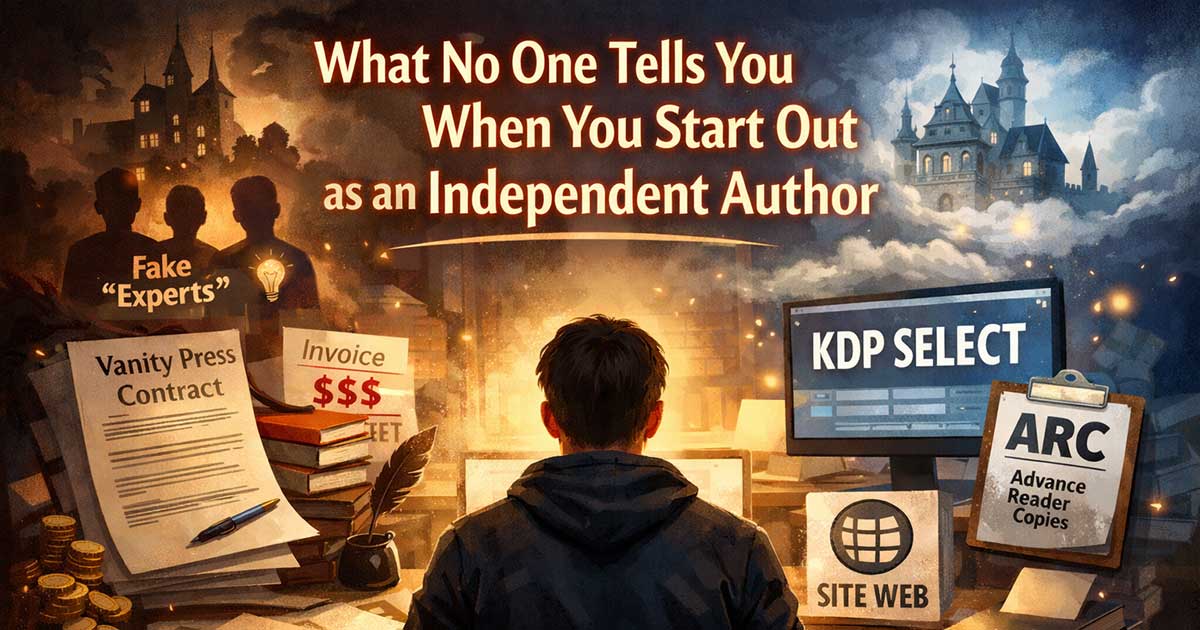
What No One Tells You When You Start Out as an Independent Author
When you start out as an independent author, you’re often driven by something simple: the desire to write, to publish, to be read. Naturally, you focus on the text, the story, the book. And that’s normal. It’s healthy. But very quickly, you discover another world—far less visible, rarely explained, yet decisive: the world of advice,…
-

Publishing Is Not Just Writing: Building Editorial Coherence
Structuring an author’s presence is not simply a matter of publishing regularly. It requires an editorial line designed to hold over time, genuine respect for the reader, and solid organization—especially when publishing in two languages. This approach is neither spectacular nor immediately visible, yet it determines everything that follows. As you read these lines, several…
-

Writing with Artificial Intelligence: Method and Limits
Method, Tone, and Tools Writing a light novel means constantly balancing emotion, coherence, and readability. Artificial intelligence helps me maintain that balance—without ever taking the pen from my hands. Writing Choices Writing is built on precise choices: level of language, tone, rhythm, and point of view. In a light novel, these elements are decisive. I…
-
The Sitemap: A Misunderstood Tool, Real Risks, and Genuine Benefits
Introduction — sitemap, crawling, and indexing: why it matters A sitemap is a file (most often in XML format) that lists a website’s URLs and helps search engines understand its structure, hierarchy, and updates. In practical terms, it influences how a site is crawled and, indirectly, how its pages are taken into account for indexing.…