

Writing method — Process, discipline, and craft tools to write, rewrite, and sustain a series
Writing method does not refer to a universal formula or a rigid framework applied mechanically. It describes a conscious, evolving approach through which an author structures their work, organizes ideas, and gives form to what they seek to convey. Behind every accomplished text lies a method—sometimes intuitive, sometimes deliberate—always shaped by experience.
Writing involves constant choices: point of view, pacing, scene construction, and the management of information. The way an author approaches narration, develops narrative writing, or maintains narrative coherence is rarely the result of pure improvisation. A method helps channel inspiration without suffocating it, offering structure when uncertainty arises.
In speculative fiction, this structuring becomes even more essential. Building a fantasy world, developing a coherent worldbuilding, or articulating a consistent lore requires careful organization. Writing methods act as a guiding thread between the universe, the characters, and the plot, preventing inconsistencies and tonal breaks.
A method is never fixed. It evolves with projects, reading habits, and practical constraints. Some authors rely on detailed planning, others progress through successive adjustments, allowing the text to transform through revision. In every case, a writing method is built over time, through direct engagement with the text, and becomes an integral part of the author’s journey.
rassembleuse in nature, this section offers reflections, analyses, and experience-based insights into writing methods, shedding light on the structural choices that transform narrative intention into a controlled, coherent, and living text.
-
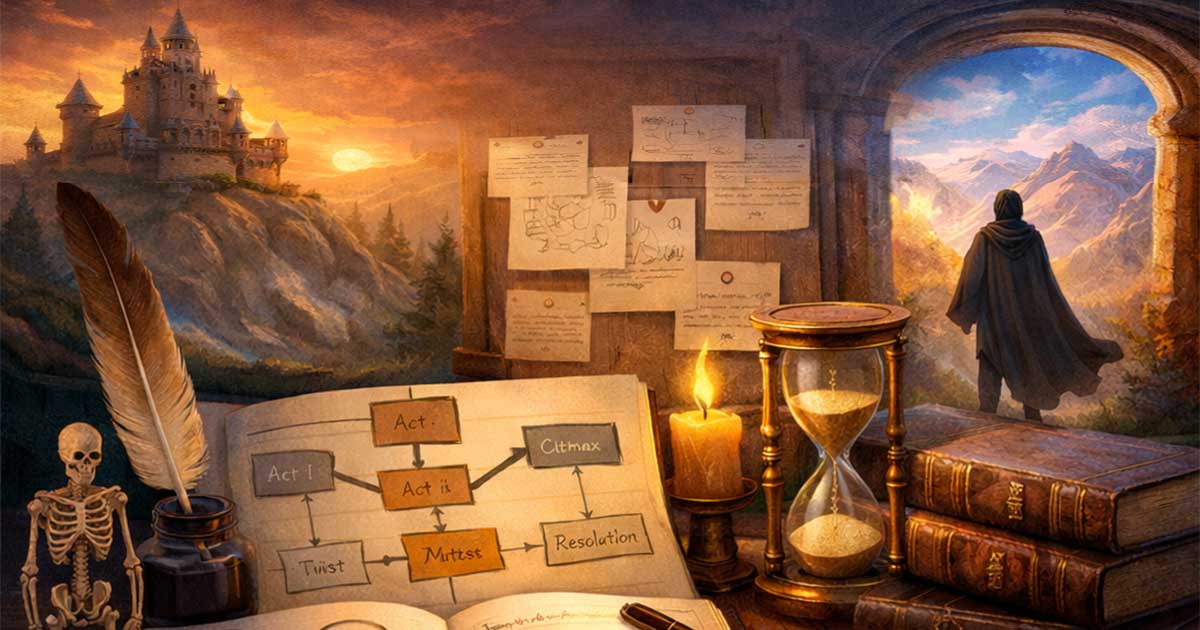
Writing a Fantasy Saga Differently: The Narrative Skeleton Before the Text
Before drafting the first line of a novel, it is possible to build the story as an architectural structure. This approach, which I call the narrative skeleton, consists of fixing the progression of events before telling them. It offers a structured way to plan a saga and to work on narrative arcs with a clear,…
-
Lineage, Legacy, and Narrative Responsibility in an Isekai
Isekai worldbuilding, legacy, and power in fantasy In an isekai story, changing worlds does not always mean starting from nothing. Sometimes, the past is already waiting there—embedded in a name, a bloodline, or a lineage the world recognizes long before the protagonist understands its weight. This article explores lineage and legacy in isekai worldbuilding, not…
-
What an Independent Author Can Build That No One Else Ever Will
When people talk about publishing, the discussion often focuses on visibility, distribution, or advertising. Traditional publishers undeniably have strong assets in this area: established networks, access to bookstores, sometimes even media exposure. It would be pointless to deny that. Yet this comparison overlooks a more fundamental reality: publishers and independent authors do not operate under…
-

How to Write a Light Novel: From Concept to Volume Structure
Most light novel projects fail not because of style, but because of structure. Writing a light novel is not about telling a simplified long story. It is a precise architecture, designed for serialization, emotional progression, and sustained tension. Pasted text When applied to the isekai fantasy genre, every structural decision becomes even more strategic: the…
-

Why Light Novels Emphasize Action and Inner Monologue
Light novels often prioritize action and inner monologue, a narrative choice that frequently puzzles readers accustomed to Western fantasy novels. This orientation is sometimes perceived as a simplification of writing or a stylistic weakness. In reality, it rests on a coherent narrative logic, closely tied to the structure of the medium and the reading experience…
-
Writing Your First Book: What You Need to Understand Before You Begin
An essential guide to understanding the key decisions behind writing a first book — and avoiding structural mistakes that can compromise a project from the start. Writing a book begins long before the first line. Before style, inspiration, or motivation, there are fundamental decisions that shape the entire project: the type of book, the intended…
-
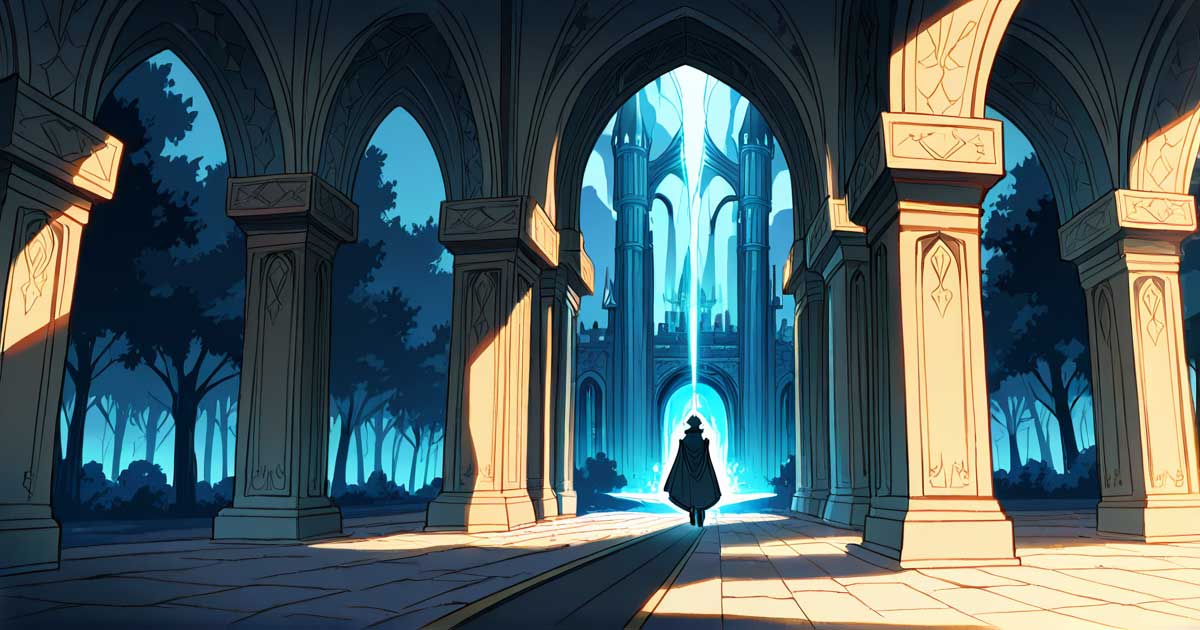
The Structure of the Light Novel Explained: Arcs, Rhythm, and Serialization Logic
Why Do Some Isekai Sagas Endure… While Others Collapse? Why do some isekai series surpass ten volumes while maintaining narrative tension, while others lose momentum after only a few books? The answer rarely lies in the initial concept.It lies in the structure of the light novel. A light novel is a serialized novel of Japanese…
-

What I Didn’t Know Before Writing My First Volume
(and why I still had to start anyway) Writing a book often begins with a contradiction. On the one hand, you feel you have an idea, a direction, something to say.On the other, you know perfectly well you’re not ready. Not really. Not technically. Not methodologically. When I started writing my first volume, I very…
-
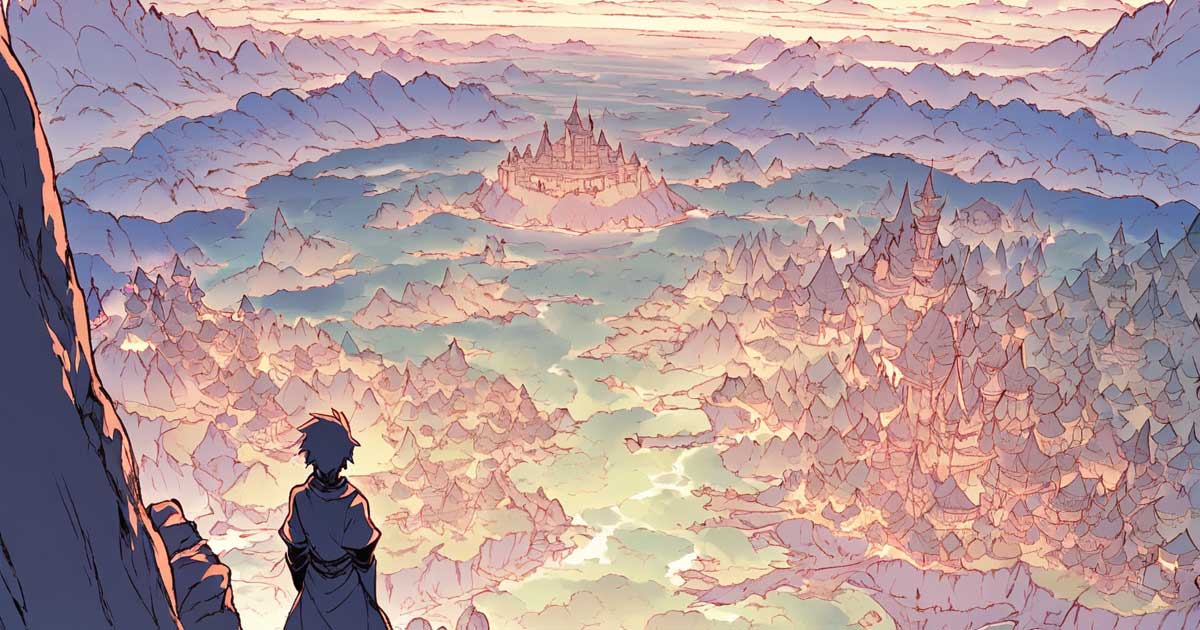
The Central Role of Progression in Light Novels
When discussing light novels, one concept comes up again and again—sometimes without being clearly named: progression.Many readers feel it instinctively, without always being able to define it. Yet it lies at the very heart of what makes the genre work, and even more so when it comes to isekai. Progression in Light Novels: More Than…
-
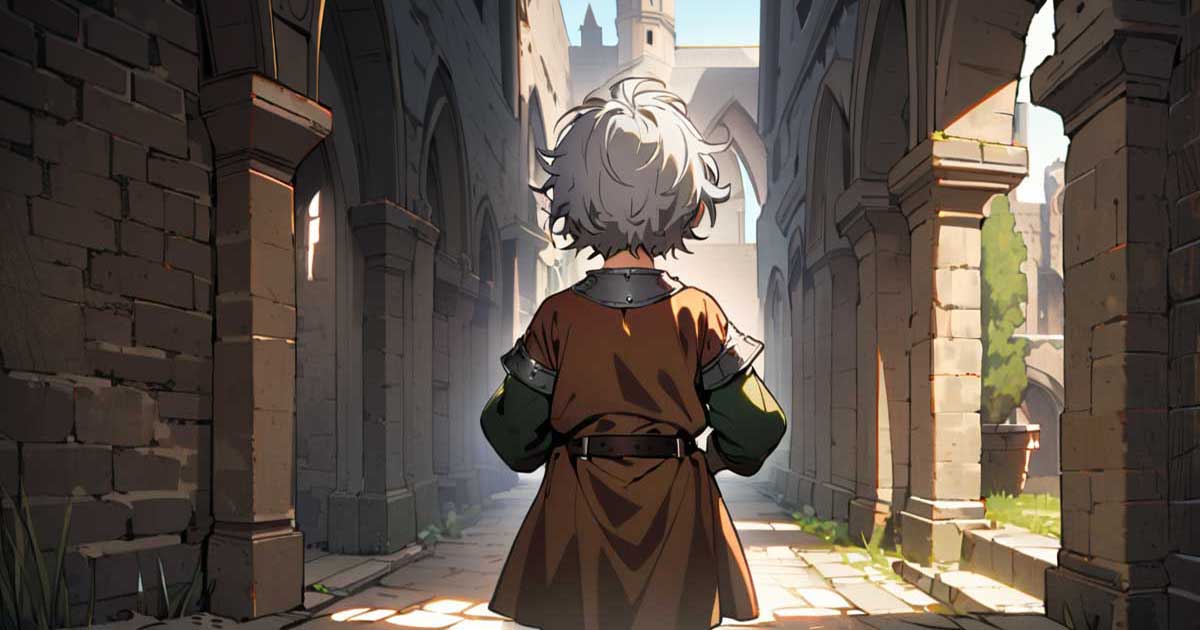
Building a Progression-Driven Protagonist
A Return of Experience with Arius Lovelace (Isekai) Characters & Emotional Dynamics In isekai, the question of progression comes up almost every time — and it is often reduced to a simple increase in power: more skills, higher numbers, greater advantages.Yet this kind of progression, effective as it may be in the short term, does…