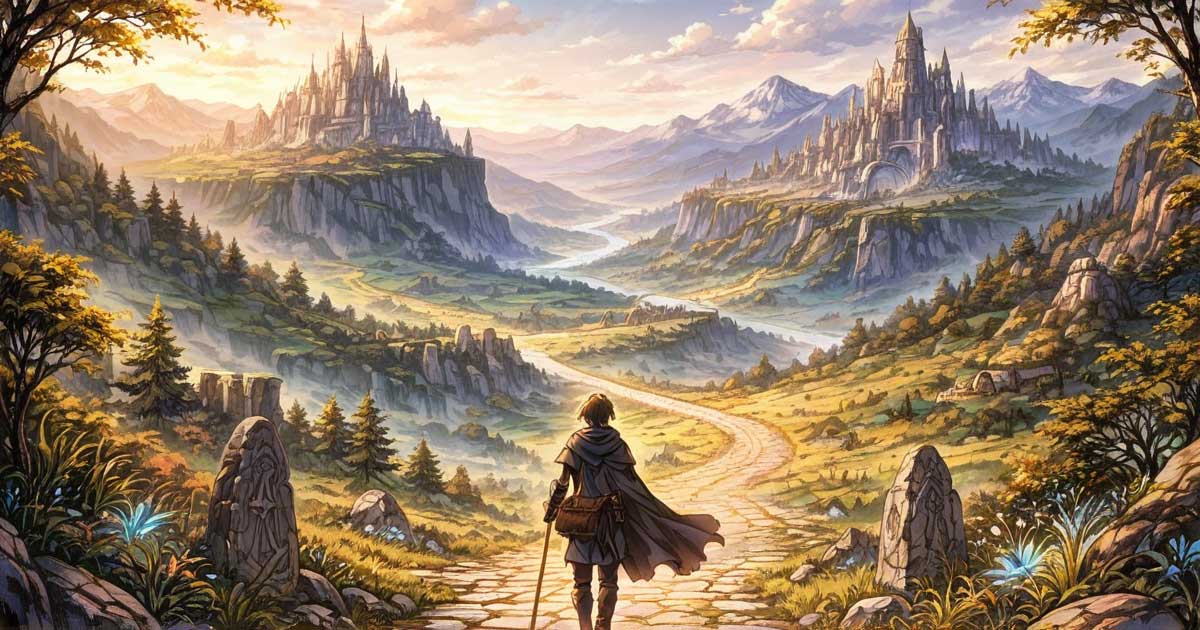

Novel — Long-form storytelling: structure, pacing, and sustained reader payoff
The novel is a narrative form built on duration, breathing space, and depth. It allows a world to settle, characters to unfold over time, and themes to emerge gradually rather than all at once. Unlike shorter formats, it embraces slowness, digression, and silence, giving readers the time needed to fully immerse themselves in a story and perceive its subtleties.
In fantasy literature, the novel plays a structural role. It provides the space required to develop a fantasy world, explore its rules, cultures, and tensions, and move beyond the idea of the setting as mere backdrop. Through worldbuilding, the narrative gains density, credibility, and a sense of continuity that extends beyond the immediate plot.
The novel is also a privileged ground for narrative writing. It supports the gradual construction of characters, their evolution, their contradictions, and their failures. Narration can shift points of view, play with rhythm, and alternate between action and interiority while maintaining long-term narrative consistency. In this format, the bond between reader and protagonist often becomes the strongest.
In stories influenced by the light novel tradition or by isekai, the novel sometimes adopts hybrid structures. It integrates progression mechanics, a clear rise in power, or elements inherited from gaming or manga culture, while preserving the stylistic freedom unique to prose. This blending of influences renews the genre without erasing its foundations.
This section brings together articles devoted to the novel as a narrative form, a tool for exploring imaginary worlds, and a space for long-term construction, highlighting its specificities, evolutions, and central role in fantasy and contemporary fiction.
-
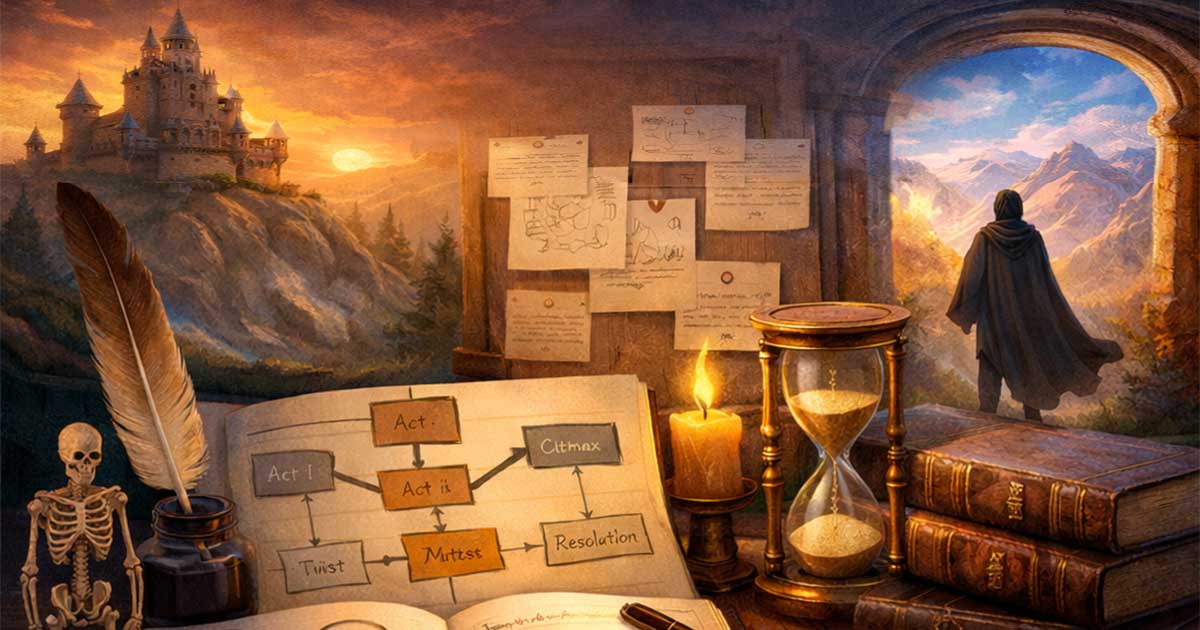
Writing a Fantasy Saga Differently: The Narrative Skeleton Before the Text
Before drafting the first line of a novel, it is possible to build the story as an architectural structure. This approach, which I call the narrative skeleton, consists of fixing the progression of events before telling them. It offers a structured way to plan a saga and to work on narrative arcs with a clear,…
-
Writing Your First Book: What You Need to Understand Before You Begin
An essential guide to understanding the key decisions behind writing a first book — and avoiding structural mistakes that can compromise a project from the start. Writing a book begins long before the first line. Before style, inspiration, or motivation, there are fundamental decisions that shape the entire project: the type of book, the intended…
-
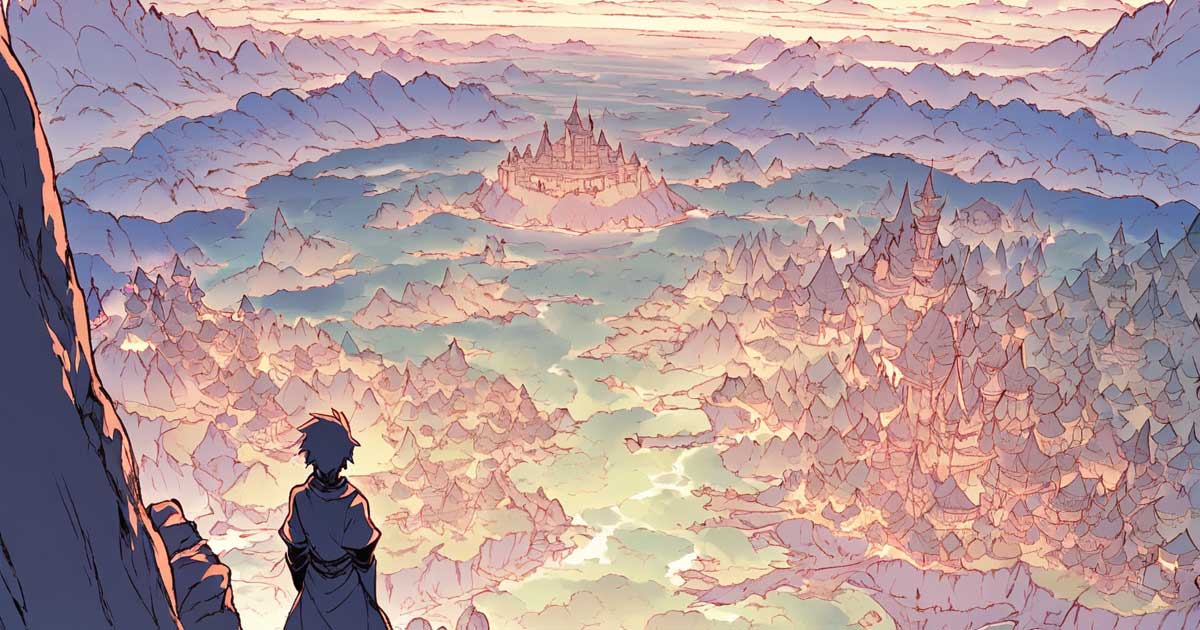
The Central Role of Progression in Light Novels
When discussing light novels, one concept comes up again and again—sometimes without being clearly named: progression.Many readers feel it instinctively, without always being able to define it. Yet it lies at the very heart of what makes the genre work, and even more so when it comes to isekai. Progression in Light Novels: More Than…
-

Novel, Manga, Light novel: What are the differences?
The terms novel, manga, and light novel are often used interchangeably, even though they refer to very different narrative forms, both in structure and in audience and intent. Understanding these distinctions not only helps readers choose works better suited to their tastes, but also prevents misunderstandings when discovering stories rooted in contemporary Japanese culture. The…