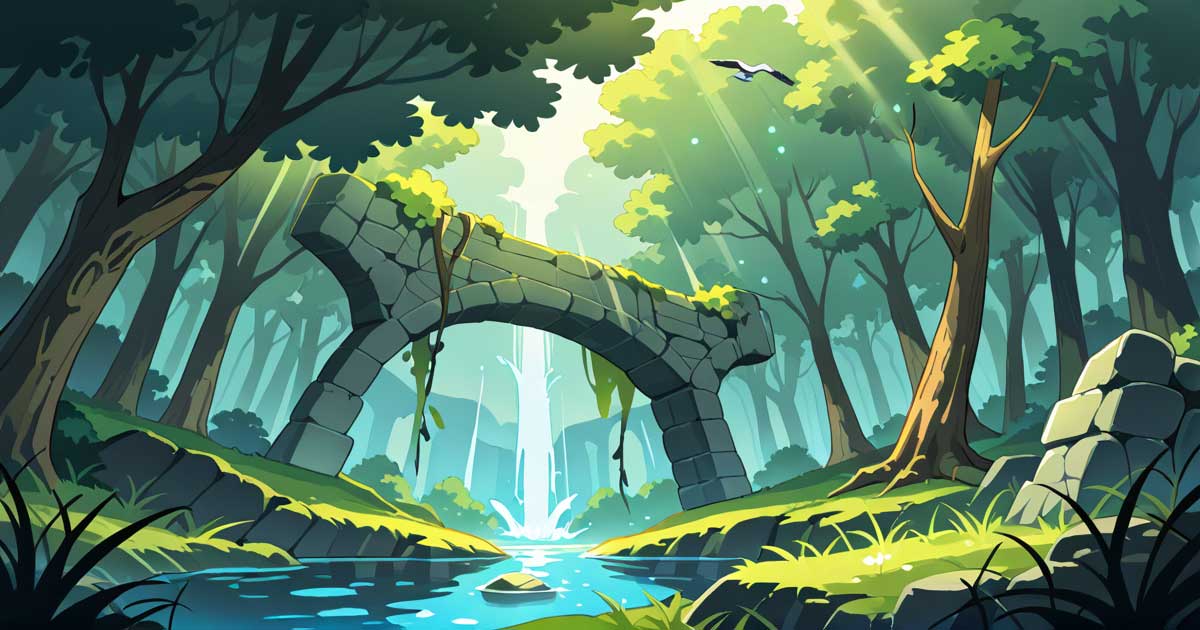

Fantasy — Imaginary worlds, myths, and fantastical narratives
Fantasy refers to a broad narrative field based on the creation of imaginary worlds in which the unreal, the mythical, or the supernatural occupy a central place. It is characterized by the existence of worlds that do not follow the laws of ordinary reality, but instead operate according to their own rules—whether magical, symbolic, or cosmic. These worlds may be entirely fictional or coexist alongside the real world, in a wide variety of forms and degrees.
Rooted in a long tradition of myths, legends, and foundational narratives, fantasy draws on multiple cultural heritages to shape its imaginative frameworks. Dragons, deities, artifacts, ancient peoples, or invisible forces are not merely decorative elements: they contribute to the internal logic of the world and directly influence the course of the story. Fantasy therefore relies on strong internal coherence, allowing the reader to accept the unreal as a fully realized narrative reality.
The genre encompasses a wide range of forms, from epic fantasy to more intimate approaches, including darker, mythological, or symbolic variations. This diversity reflects both the types of worlds explored and the themes addressed: quests, conflict, destiny, power, identity, or transmission. Fantasy is not limited to escapism; it also provides a framework through which the real world can be examined through the lens of imagination.
In all cases, fantasy is built upon a balance between invention and structure. The rules governing the world, the role assigned to the marvelous, and the way the unreal is integrated into the narrative determine the credibility and strength of the work. This ability to create coherent worlds rich in meaning and myth is what defines fantasy as a narrative genre in its own right. It often relies on careful worldbuilding and close attention to lore, which give the universe its depth and continuity.
This section brings together articles related to fantasy, approaching the genre as a narrative and conceptual field. The associated texts explore its foundations, its forms, and its variations, as well as the ways in which imaginary worlds are constructed, interpreted, and used in storytelling, including in related genres such as isekai.
-

When Lore Serves the Story (and When It Should Remain Invisible)
This article examines the role of lore in fantasy, light novel, and isekai stories by clearly distinguishing between constructed lore (what the author knows) and narrated lore (what the reader needs to know). It explains why excessive exposition can harm immersion and slow down the narrative through infodumps, while also showing how invisible lore can…
-

Writing a Saga: Thinking in Volumes and Arcs
How do you structure a saga across multiple volumes? This article explores the differences between volumes, narrative arcs, and the overall saga while presenting an alternative approach based on progression threads. Through practical examples, planning methods, common mistakes, and a useful checklist, learn how to build a more coherent Fantasy, Light Novel, or Isekai series…
-

The Discipline of Writing Over the Long Term
Writing a novel over several months or several years rarely requires constant motivation. In practice, most authors who complete long projects mainly develop a writing discipline capable of withstanding: This article explains how to write regularly over the long term and develop a writing discipline capable of carrying a novel through to completion, especially in…
-

Authority Figures in Fantasy Light Novels
Authority Figures in ISEKAI The Otherworlder’s Heir In many fantasy and isekai light novel stories, a protagonist’s development does not rely solely on adventure or the acquisition of new powers. It often depends on a network of authority figures that shape the hero’s psychology, values, and place in the world. These figures go beyond the…
-

The Optimal Structure of an Isekai: Conflict, Progression, and Revelation
An effective isekai does not rely solely on transporting the protagonist into another world. This starting point is a catalyst, not a narrative structure. Understanding the best structure for an isekai light novel means organizing three fundamental forces: conflict, progression, and revelation. In ISEKAI The Otherworlder’s Heir, this narrative architecture forms the backbone of the…
-

Fantasy Novels
Fantasy Novels: From Western Epic Sagas to Japanese Light Novel Worlds Yet behind this apparent unity lies a genre of remarkable richness. Fantasy has developed through multiple literary traditions: the great Western epic sagas on one side, and more recently the narrative universes shaped by Japanese light novels on the other. To understand modern fantasy…
-

The Psychological Evolution of Arius Across the Volumes
Introduction — Fragility and Coherence in an Isekai Light Novel In a Light Novel, and especially in an isekai fantasy, character progression is often associated with rising power. Yet power alone does not create long-term reader attachment. What truly sustains engagement is psychological coherence. In this article, I examine Arius’s psychological evolution across the volumes,…
-
Understanding the Difference Between Isekai and Fantasy
Isekai vs Fantasy: What Truly Sets Them Apart Confusion between isekai and fantasy is common, particularly when the isekai genre is first encountered through contemporary light novels. Yet the difference between isekai and fantasy is not merely a matter of vocabulary—it lies in the very structure of the narrative. Fantasy refers to a broad literary…
-
The Notion of Merit in the Transmission of Power in Arius Lovelace
Introduction In many fantasy narratives—and even more so in isekai—the transmission of power rests on an implicit principle: to receive is to be worthy. The protagonist inherits exceptional abilities, sometimes upon arrival in a new world, and their legitimacy is rarely questioned. The universe of ISEKAI The Otherworlder’s Heir adopts a different stance. It draws…
-
The Central Role of Progression in Light Novels
When discussing light novels, one concept comes up again and again—sometimes without being clearly named: progression.Many readers feel it instinctively, without always being able to define it. Yet it lies at the very heart of what makes the genre work, and even more so when it comes to isekai. Progression in Light Novels: More Than…