
Fantasy — Analysis, worlds, and structures
Fantasy offers a privileged ground for exploring the construction of complex worlds, where imagination is not limited to invention but is organized around precise structures and internal rules. This section focuses on how such worlds are conceived, articulated, and sustained over time in order to produce coherent and immersive narratives.
The analyses presented here seek to uncover the foundations of fantasy worlds, whether mythic, symbolic, or cultural in nature. They examine the laws that govern these universes—magic, hierarchies, invisible forces—and consider how these choices shape narration, narrative rhythm, and overall credibility. To go further on these aspects, you can also consult the Universe & Magic section.
A significant place is given to the structures specific to the genre: the balance between the marvelous and the everyday, the handling of power and its limits, and the role of myth, destiny, or transmission. These elements are approached as narrative levers, whose effectiveness depends on how well they are integrated into the fictional world and into the characters’ trajectories.
The section also explores the diversity of approaches within fantasy, from primarily epic narratives to more intimate, darker, or symbolic forms. The texts analyze how these orientations influence tone, thematic scope, and craft choices, without ever losing sight of the overall coherence of the world.
This section therefore offers a space for reflection devoted to fantasy as a structured narrative field. It is intended for readers and writers who want to understand how fantasy worlds are built, organized, and leveraged in order to create narratives that are coherent, durable, and meaningful.
-

Magical Systems in Isekai: Rules, Limits, and Narrative Stakes
In an isekai story, magic is never just background decoration. It structures the world, defines social hierarchies, shapes conflicts, and guides the protagonist’s arc. In a light novel, it also becomes a rhythmic engine: progression, revelations, limitations, and strategy. Understanding how to design a coherent magical system is essential for writing a strong and lasting…
-
Understanding the Difference Between Isekai and Fantasy
Isekai vs Fantasy: What Truly Sets Them Apart Confusion between isekai and fantasy is common, particularly when the isekai genre is first encountered through contemporary light novels. Yet the difference between isekai and fantasy is not merely a matter of vocabulary—it lies in the very structure of the narrative. Fantasy refers to a broad literary…
-
Mana and Ether: Why Two Magic Systems in ISEKAI The Otherworld’s Heir
In ISEKAI The Otherworld’s Heir, the universe relies on two distinct magic systems: mana and ether.This article explains why this dual magic system is central to fantasy worldbuilding, narrative coherence, and the protagonist’s progression in an isekai.By distinguishing a widespread, versatile magic from a rare, physically “real” magic, the setting avoids the common inconsistencies of…
-
Worldbuilding: Building a Coherent Universe Without Explaining Everything — Rules, Margins, and Invisible Decisions
Worldbuilding is one of the pillars of a coherent universe in fantasy and isekai. Building a believable world does not mean explaining everything, but establishing structuring rules, a stable internal logic, and invisible decisions that can support the story over time. In this article, I am not describing a specific universe. I am presenting a…
-
How to Share Worldbuilding Without Drowning the Reader – Fantasy & Isekai Writing
Balance, pacing, and information delivery in fantasy and isekai Introductory Summary Building a rich universe is essential in fantasy and isekai, but poorly delivered worldbuilding can quickly weigh a story down. This article explores how to avoid infodumps, preserve narrative pacing, and transmit information organically—without sacrificing depth or coherence. Introduction — The Invisible Worldbuilding Trap…
-
Why Lore Is Essential in an Isekai
You can’t build a story on empty space The issue is simple: when you set out to build an isekai and want to combine action, challenges, humor, romance, or drama, none of it can exist in a vacuum.These elements do not emerge on their own. They arise from interactions, shaped by an environment, social rules,…
-
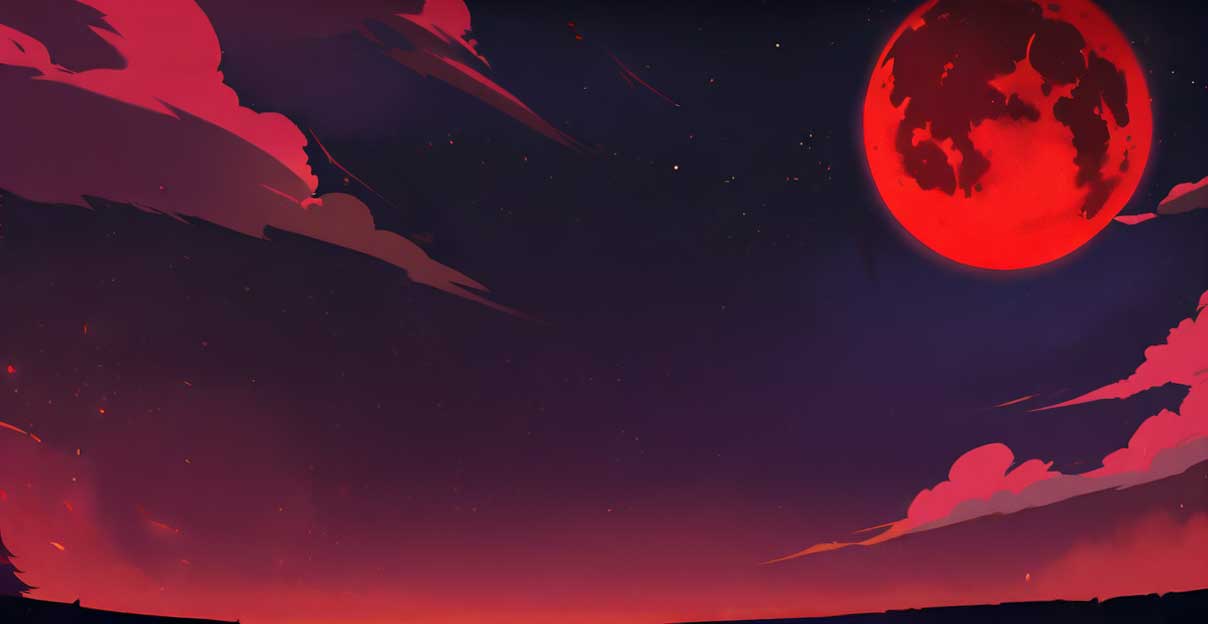
Vespera — The Red Moon
Meaning and Origin of the Name Vespera The name Vespera derives from the Latin word vesper, meaning “evening.” In ancient times, the term referred to the celestial body visible at twilight — the “evening star” — appearing when daylight fades but night has not yet fully taken hold. In classical tradition, this star corresponded to…
-
Magic in the Universe of ISEKAI The Otherworlder’s Heir
In the world of ISEKAI The Otherworlder’s Heir, magic is neither arbitrary nor universal. It follows precise rules and is structured around two major families, fundamentally opposed in the way they perceive power and act upon reality. Mana-based magic — Transcending the Laws of the World Mana-based magic is based on the use of magicules,…
-
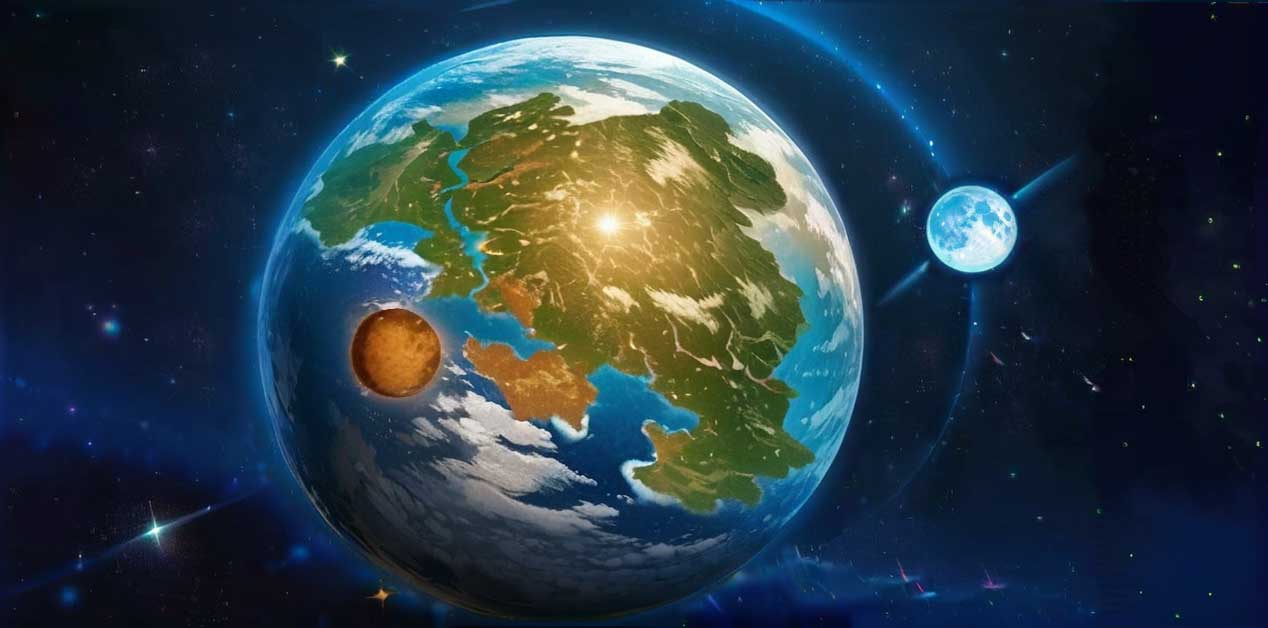
The Great Land
The birth of a myth People say that before the arrival of the second moon — Vespera —, at the dawn of the cataclysm that marked the birth of a new era, no one knew what shape the world truly had. Nations lived by the rhythm of the seasons, convinced that the land simply stretched…