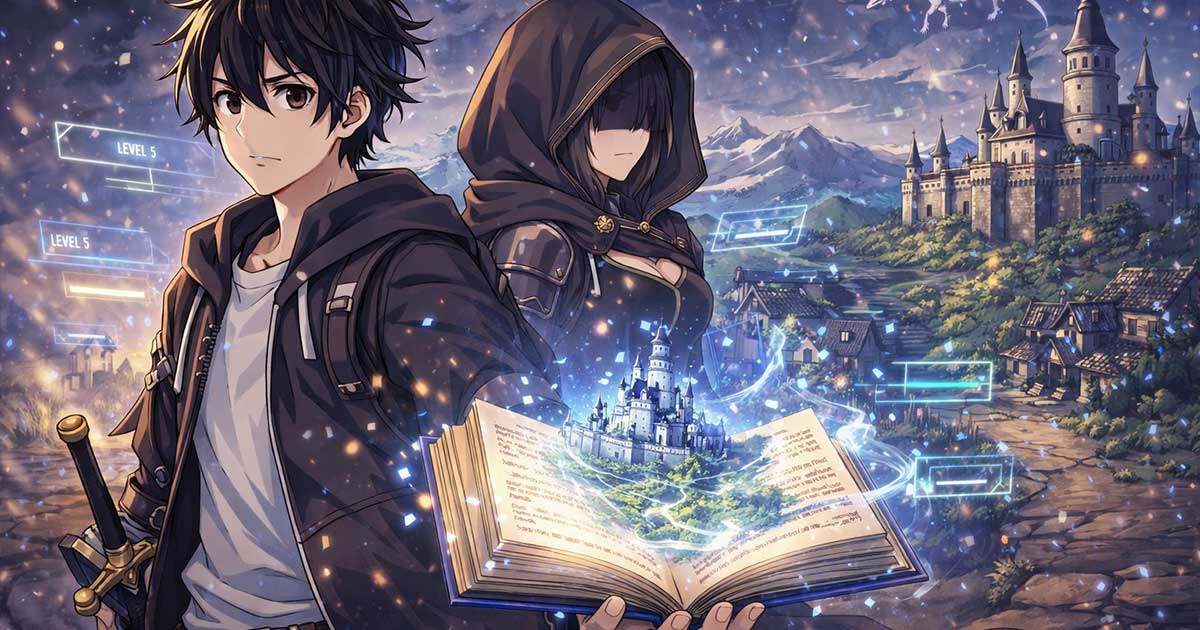

Fantasy Light Novel — Between worldbuilding, narrative pacing, and Japanese influences
Fantasy light novel stands at the intersection of fantasy and the light novel format. It builds on the foundations of fantasy—imaginary worlds, internal rules, epic or intimate stakes—while adapting them to a structure designed for readability, pacing, and serialization.
Writing a fantasy light novel introduces a central constraint: the density of the world must never slow down the reading experience. The universe must be clearly established, but without heavy exposition. This requires a precise command of the light novel style, where information is conveyed through action, dialogue, and the protagonist’s point of view.
This format often emphasizes progression: rising power, successive learning phases, training arcs, or narrative thresholds. These elements only remain effective if they stay aligned with the rules defined from the outset, which demands constant attention to narrative consistency and overall story rhythm.
The fantasy light novel is also shaped by strong Japanese inspirations, both in structure and in the way action, introspection, and character evolution are handled. This influence is not merely aesthetic; it directly affects how the story is segmented and experienced by the reader.
This section presents articles and analyses dedicated to the fantasy light novel as a demanding hybrid form: how to condense a rich universe, how to maintain immersion without overload, and how to use fantasy within a format built for narrative efficiency.
-
Understanding the Difference Between Isekai and Fantasy
Isekai vs Fantasy: What Truly Sets Them Apart Confusion between isekai and fantasy is common, particularly when the isekai genre is first encountered through contemporary light novels. Yet the difference between isekai and fantasy is not merely a matter of vocabulary—it lies in the very structure of the narrative. Fantasy refers to a broad literary…
-
What Is an Isekai? Definition, Origins, and Genre Tropes
Isekai is one of the most popular genres in modern Japanese storytelling, spanning manga, light novels, and anime. It features a protagonist who is transported, summoned, or reincarnated into another world—often radically different from our own. Since the 2010s, isekai has experienced a spectacular rise. Sword Art Online, Re:Zero, Mushoku Tensei, Overlord—these titles pushed the…