
Narrative consistency — Internal logic and narrative continuity
Narrative consistency is one of the most discreet yet decisive pillars of a successful story. It is not limited to the absence of visible errors or contradictions; it refers to the overall sense that everything in the narrative holds together. Events unfold with purpose, character reactions feel legitimate, and the world maintains a recognizable logic—even when imagination or magic come into play.
This consistency first relies on a clear continuity of cause and effect. Every decision, revelation, or rupture must find its place within a broader structure. This is where narrative writing plays a central role: it connects scenes, adjusts pacing, and prevents the story from becoming a mere succession of striking moments without a guiding thread. Even the most impressive scene quickly loses its impact if it is not supported by what precedes it and what it sets in motion.
Narrative consistency also concerns characters. Their development can only feel credible if it follows a readable progression, shaped by successes, failures, and meaningful choices. This logic feeds character development and strengthens immersion, giving readers the sense that the transformations they witness are the natural outcome of the story experienced, rather than artificial adjustments imposed by the plot.
In fantasy narratives and works driven by worldbuilding, this requirement becomes even more critical. The rules of the world—magical, social, or political—must remain stable and intelligible. A deliberate exception can be accepted, and even enriching, but it must be justified and integrated into the overall system; otherwise, the suspension of disbelief begins to erode.
This section brings together articles dedicated to narrative consistency in its many facets: continuity of events, internal logic of characters, stability of fictional worlds, and the articulation of scenes. The aim is to explore how this consistency sustains storytelling over time and enables the construction of solid narratives that engage readers without ever breaking the bond of trust that ties them to the story.
-
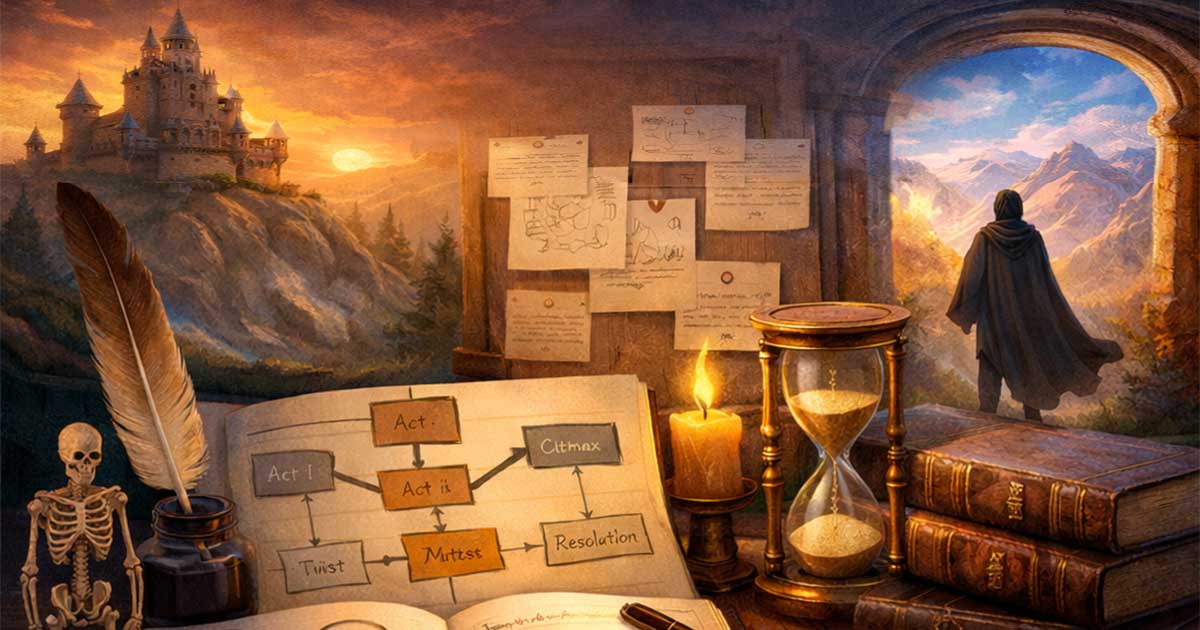
Writing a Fantasy Saga Differently: The Narrative Skeleton Before the Text
Before drafting the first line of a novel, it is possible to build the story as an architectural structure. This approach, which I call the narrative skeleton, consists of fixing the progression of events before telling them. It offers a structured way to plan a saga and to work on narrative arcs with a clear,…
-
Understanding the Difference Between Isekai and Fantasy
Isekai vs Fantasy: What Truly Sets Them Apart Confusion between isekai and fantasy is common, particularly when the isekai genre is first encountered through contemporary light novels. Yet the difference between isekai and fantasy is not merely a matter of vocabulary—it lies in the very structure of the narrative. Fantasy refers to a broad literary…
-
Lineage, Legacy, and Narrative Responsibility in an Isekai
Isekai worldbuilding, legacy, and power in fantasy In an isekai story, changing worlds does not always mean starting from nothing. Sometimes, the past is already waiting there—embedded in a name, a bloodline, or a lineage the world recognizes long before the protagonist understands its weight. This article explores lineage and legacy in isekai worldbuilding, not…
-
How to Write a Light Novel: From Concept to Volume Structure
Most light novel projects fail not because of style, but because of structure. Writing a light novel is not about telling a simplified long story. It is a precise architecture, designed for serialization, emotional progression, and sustained tension. Pasted text When applied to the isekai fantasy genre, every structural decision becomes even more strategic: the…
-
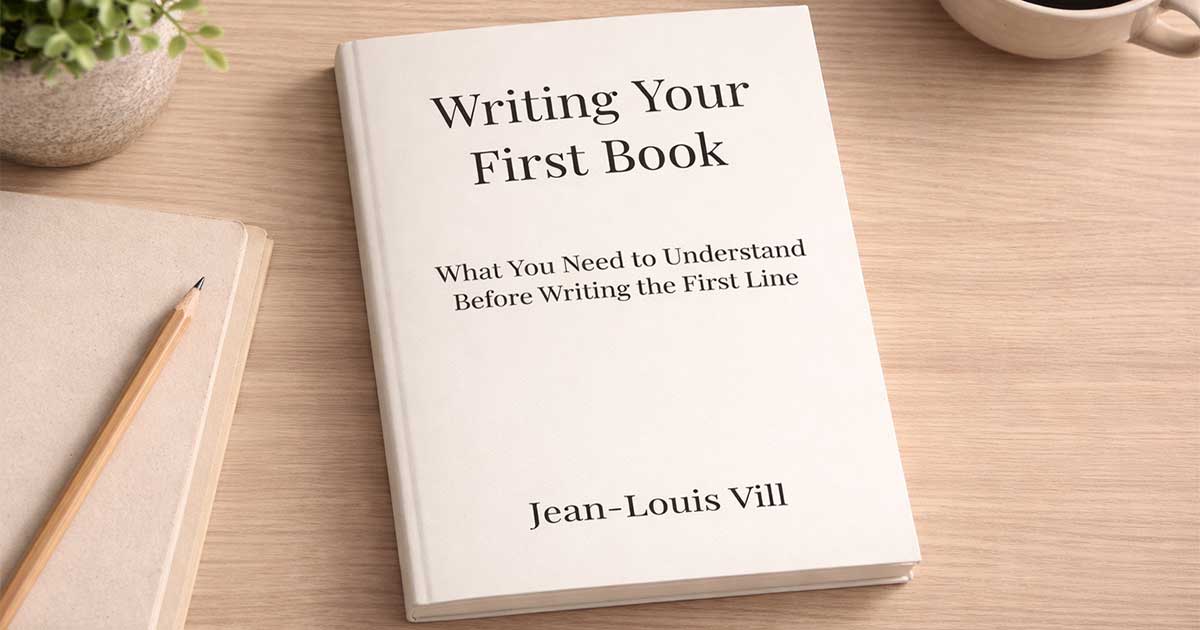
Writing Your First Book: What You Need to Understand Before You Begin
An essential guide to understanding the key decisions behind writing a first book — and avoiding structural mistakes that can compromise a project from the start. Writing a book begins long before the first line. Before style, inspiration, or motivation, there are fundamental decisions that shape the entire project: the type of book, the intended…
-
The Notion of Merit in the Transmission of Power in Arius Lovelace
Introduction In many fantasy narratives—and even more so in isekai—the transmission of power rests on an implicit principle: to receive is to be worthy. The protagonist inherits exceptional abilities, sometimes upon arrival in a new world, and their legitimacy is rarely questioned. The universe of ISEKAI The Otherworlder’s Heir adopts a different stance. It draws…
-
The Structure of the Light Novel Explained: Arcs, Rhythm, and Serialization Logic
Why Do Some Isekai Sagas Endure… While Others Collapse? Why do some isekai series surpass ten volumes while maintaining narrative tension, while others lose momentum after only a few books? The answer rarely lies in the initial concept.It lies in the structure of the light novel. A light novel is a serialized novel of Japanese…
-
The Weight of Legacy in Arius Lovelace
Psychological and Narrative Analysis of an Isekai Character Introduction Legacy is often portrayed as a promise: that of a greater destiny, a future accomplishment, or latent greatness. In ISEKAI The Otherworlder’s Heir, this notion plays a central role in the psychological construction of the character, but in a form that differs markedly from the archetypal…
-

What I Didn’t Know Before Writing My First Volume
(and why I still had to start anyway) Writing a book often begins with a contradiction. On the one hand, you feel you have an idea, a direction, something to say.On the other, you know perfectly well you’re not ready. Not really. Not technically. Not methodologically. When I started writing my first volume, I very…
-
The Central Role of Progression in Light Novels
When discussing light novels, one concept comes up again and again—sometimes without being clearly named: progression.Many readers feel it instinctively, without always being able to define it. Yet it lies at the very heart of what makes the genre work, and even more so when it comes to isekai. Progression in Light Novels: More Than…