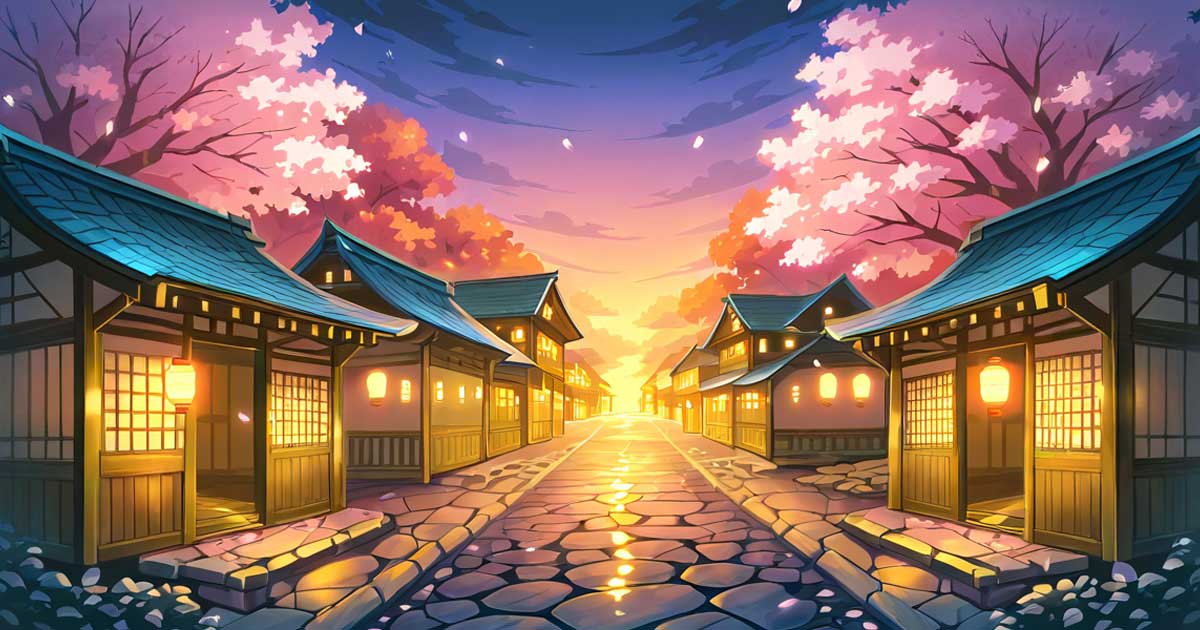

Japanese inspirations — Narrative sensibility, rhythm, and the art of implication
Japanese inspirations hold a distinctive place in contemporary fantasy, and even more so within the light novel tradition. They are not limited to recognizable aesthetics or surface references, but stem from a particular way of thinking about storytelling. They shape how a narrative unfolds, how emotions are suggested rather than stated, and how a world reveals itself gradually instead of through direct exposition.
This approach often favors lived experience over explanation. Silence carries as much weight as dialogue, gestures become narrative signals, and repetition functions as a tool of rhythm rather than a flaw. This sensibility directly informs narrative consistency, where each scene flows into the next without rupture, as well as narrative writing that embraces implication, restraint, and slow progression as strengths.
Japanese influences also shape the way characters evolve. Growth is not always linear or spectacular; it often emerges through small decisions, hesitation, and quiet failures. This perspective feeds into character development and strengthens immersion, leaving space for the reader to project emotions and meaning rather than having everything spelled out.
These influences naturally resonate with genres such as isekai, manga, and light novel style, where the world is never static but constantly reshaped through the protagonist’s perception. They encourage authors to think of their universe as a sensitive, evolving space—sometimes fragmented—rather than a fully mapped system defined from the outset.
This section brings together articles that examine Japanese inspirations in their many forms: their cultural roots, their impact on narrative structure and character portrayal, and the ways they can enrich modern fantasy without imitation, in service of a coherent universe and a compelling reading experience.
-
What Is an Isekai? Definition, Origins, and Genre Tropes
Isekai is one of the most popular genres in modern Japanese storytelling, spanning manga, light novels, and anime. It features a protagonist who is transported, summoned, or reincarnated into another world—often radically different from our own. Since the 2010s, isekai has experienced a spectacular rise. Sword Art Online, Re:Zero, Mushoku Tensei, Overlord—these titles pushed the…