
Narration — Voice, perspective, and delivery: how the story guides emotion and focus
Narration refers to the art of conveying a story, but also to the way that story is perceived, felt, and understood by the reader. It goes far beyond the mere sequencing of events, encompassing point of view, pacing, focalization, and narrative voice. A well-crafted narration guides attention, builds anticipation, and gives weight to narrative decisions.
Narration shapes the relationship between text and reader. It determines what is shown, what is suggested, and what is deliberately left unsaid. Work on narrative writing and narrative coherence helps maintain internal consistency, even when the story plays with ellipses, tonal shifts, or changes in perspective. Every narrative choice directly influences the reading experience.
In speculative fiction, narration is inseparable from the universe itself. Whether the story unfolds in a fantasy world, a parallel world, or within an isekai framework, the manner of telling conditions the reader’s suspension of disbelief. Worldbuilding and lore only gain meaning when they are woven into narration with precision, at the right moment and with the appropriate intensity.
Narration also governs rhythm and progression. It can accelerate action, slow down time, highlight character development, or deepen immersion. The choice of a light novel style, for instance, often favors fluid narration, focused on inner perspective and the efficiency of scenes.
This section examines narration as a central writing tool—its mechanisms, variations, and role in meaning-making—to better understand how a story takes shape, unfolds, and leaves a lasting impression on the reader.
-
Writing with Artificial Intelligence: Method and Limits
Method, Tone, and Tools Writing a light novel means constantly balancing emotion, coherence, and readability. Artificial intelligence helps me maintain that balance—without ever taking the pen from my hands. Writing Choices Writing is built on precise choices: level of language, tone, rhythm, and point of view. In a light novel, these elements are decisive. I…
-
How to Share Worldbuilding Without Drowning the Reader – Fantasy & Isekai Writing
Balance, pacing, and information delivery in fantasy and isekai Introductory Summary Building a rich universe is essential in fantasy and isekai, but poorly delivered worldbuilding can quickly weigh a story down. This article explores how to avoid infodumps, preserve narrative pacing, and transmit information organically—without sacrificing depth or coherence. Introduction — The Invisible Worldbuilding Trap…
-
Why Isekai Works So Well: Immersion, Progression, and Narrative Fantasy
Introduction Isekai is not merely a subgenre of Japanese fantasy. It is an extremely effective narrative device, designed to quickly capture the reader, immerse them in a codified world, and guide them through a gradual rise in power. If it works so well—whether in light novels, manga, or anime—it is neither by chance nor a…
-
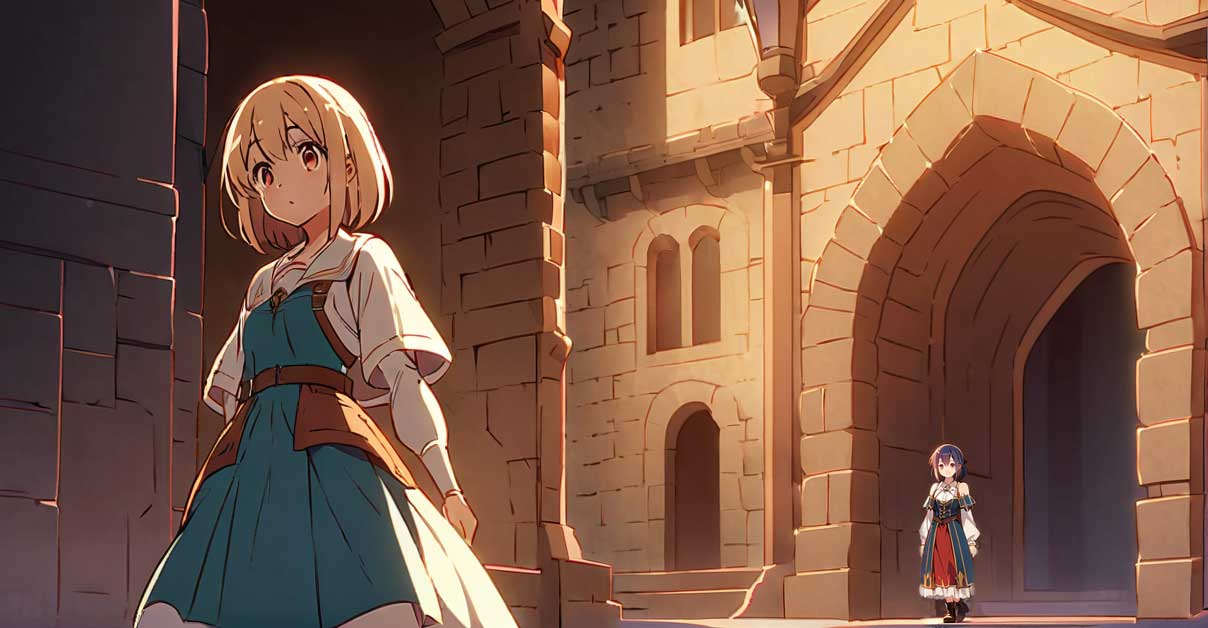
What Is a Light Novel?
Born in Japan, the light novel is a fully fledged narrative format that is often misunderstood in the West. Neither a traditional novel, nor a manga, nor a simple spin-off of animation, it follows a very specific logic of reading, writing, and serialization. It most commonly takes the form of relatively short volumes, sometimes accompanied…
-
Novel, Manga, Light novel: What are the differences?
The terms novel, manga, and light novel are often used interchangeably, even though they refer to very different narrative forms, both in structure and in audience and intent. Understanding these distinctions not only helps readers choose works better suited to their tastes, but also prevents misunderstandings when discovering stories rooted in contemporary Japanese culture. The…
-
What Is an Isekai? Definition, Origins, and Genre Tropes
Isekai is one of the most popular genres in modern Japanese storytelling, spanning manga, light novels, and anime. It features a protagonist who is transported, summoned, or reincarnated into another world—often radically different from our own. Since the 2010s, isekai has experienced a spectacular rise. Sword Art Online, Re:Zero, Mushoku Tensei, Overlord—these titles pushed the…