

Light Novel Style
Light Novel Style refers to a narrative approach that prioritizes fluidity, pacing, and accessibility without sacrificing the depth of its universe. Emerging from the intersection of the novel form and the visual influence of manga, it emphasizes action, inner monologue, and clearly segmented scenes designed for immersive, continuous reading.
This style is first recognized through its efficiency. Narrative writing goes straight to the point while maintaining a distinct voice. Descriptions are focused, dialogue remains dynamic, and the alternation between narration and internal thought creates immediate proximity to the characters. Rather than relying on lengthy exposition, the story advances through lived experience.
In fantasy and isekai narratives, the light novel style relies on a clear structure: gradual progression, visible narrative milestones, and well-defined arcs. Training arcs, power progression, and character development integrate naturally into the flow of the story, enhancing readability without diminishing narrative stakes.
Illustration also plays a central role. It is not merely decorative; it sets the rhythm of reading, highlights key moments, and visually anchors the universe. Combined with coherent worldbuilding and a well-structured lore, illustration actively contributes to immersion.
The light novel style further distinguishes itself through its ability to incorporate game-inspired mechanics, such as level systems or skill systems, without disrupting narrative flow. When carefully balanced, these elements provide clear reference points and sustain dramatic tension rather than slowing the story down.
This section offers insight into the conventions, strengths, and uses of the light novel style, showing how it weaves together rhythm, universe, and progression. It outlines a reading path that highlights key writing choices and their effects, before leading into articles that explore its mechanisms, variations, and concrete applications in greater depth.
-

The Author Website: Foundational Decisions and Embraced Independence
When visibility is discussed, many people think first of social media.This is a strategic mistake. Social networks are relays.The website, on the other hand, is the foundation. In a serious independent author’s approach, a website is not optional. It is the keystone of any long-term strategy — not because it is fashionable, but because it…
-

Why I Chose to Write an Isekai
Reader frustrations, authorial choice, and an assumed narrative framework Introduction — Why isekai naturally imposed itself I did not choose to write an isekai because it was fashionable.It imposed itself on me as the most natural response to my frustrations as a reader and to my ambitions as an author. Before writing, I spent a…
-
Understanding Kishōtenketsu in Light Novels
Why some Japanese stories do not revolve around conflict, but around a path Introduction When Western readers encounter a Japanese light novel — and even more so an isekai — they may experience a form of narrative dissonance that is difficult to articulate. The story seems to progress slowly. Certain scenes appear anecdotal. Important elements…
-

Japanese Narrative vs Western Narrative
Foundations and Narrative Framework Introduction The question of Japanese narrative versus Western narrative is not merely a matter of cultural contrast. It involves structural choices, a philosophy of storytelling, and a different relationship between author, character, and reader. In the context of light novels and, more specifically, isekai, this difference becomes not only visible, but…
-
Publishing Is Not Just Writing: Building Editorial Coherence
Structuring an author’s presence is not simply a matter of publishing regularly. It requires an editorial line designed to hold over time, genuine respect for the reader, and solid organization—especially when publishing in two languages. This approach is neither spectacular nor immediately visible, yet it determines everything that follows. As you read these lines, several…
-

Writing with Artificial Intelligence: Method and Limits
Method, Tone, and Tools Writing a light novel means constantly balancing emotion, coherence, and readability. Artificial intelligence helps me maintain that balance—without ever taking the pen from my hands. Writing Choices Writing is built on precise choices: level of language, tone, rhythm, and point of view. In a light novel, these elements are decisive. I…
-

Learning to Write: What You Don’t See at First
The 5% of Writing That Is Visible Writing is often thought of as style. In reality, style is only the tip of the iceberg. When I decided to start writing, I was aware of one thing: I possessed only a small fraction of the skills required. Perhaps five percent. The desire to tell a story,…
-
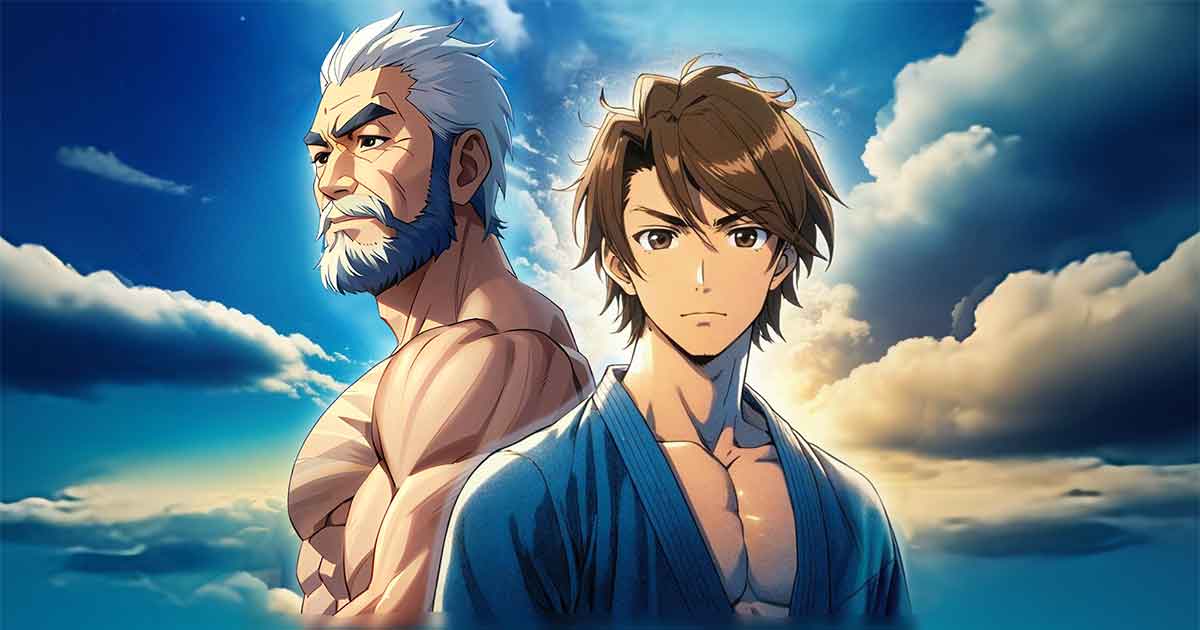
Michihiro Ikemizu
In the garden of Okinawa, family and press were gathered.A new record was about to be broken. Everything had been carefully prepared.The ground had been cleared with precision.The concrete blocks were aligned, their edges sharp, their surfaces still intact. Michihiro Ikemizu knew their density, their resistance, the exact way they would give under impact.His body…
-

Why Lore Is Essential in an Isekai
You can’t build a story on empty space The issue is simple: when you set out to build an isekai and want to combine action, challenges, humor, romance, or drama, none of it can exist in a vacuum.These elements do not emerge on their own. They arise from interactions, shaped by an environment, social rules,…
-

Why Isekai Works So Well: Immersion, Progression, and Narrative Fantasy
Introduction Isekai is not merely a subgenre of Japanese fantasy. It is an extremely effective narrative device, designed to quickly capture the reader, immerse them in a codified world, and guide them through a gradual rise in power. If it works so well—whether in light novels, manga, or anime—it is neither by chance nor a…