
Lore — Myths, secrets, and the hidden history of the world
The lore refers to the body of knowledge, rules, and foundational elements that define a fictional universe. It encompasses everything that exists in the background of a narrative: the history of the world, its internal laws, beliefs, power systems, geography, as well as the invisible principles that ensure its coherence. The lore is not necessarily presented directly; it may be suggested, fragmented, or implicit, yet it consistently structures the world in which the characters evolve.
The term lore originates from Old English and literally means “knowledge” or “transmitted wisdom.” It was originally used to describe a collective form of knowledge, often oral, tied to traditions, myths, and foundational narratives. In the genres of fantasy, science fiction, and imaginary worlds, the word has become established as a way to describe this deep layer of information that gives a fictional world its depth and credibility.
Concretely, lore involves the construction of a coherent universe: the rules that govern it—such as the laws of the magic system or technology—the limits of what is possible or impossible, the origins of peoples, conflicts, or civilizations, as well as the internal logic that connects these elements together. It also includes recurring descriptions, historical references, value systems, and the invisible mechanisms that explain why the world functions in one way rather than another.
In a work of fiction, lore is not merely a backdrop; it forms the conceptual framework upon which events unfold, characters make choices, and the narrative evolves. The articles gathered here explore different aspects of this notion, examining how lore is conceived, structured, and used in fantasy and isekai universes, in close relation to worldbuilding and mythological foundations that give these worlds their depth.
This section brings together articles related to lore, focusing on how fictional universes are built, structured, and made coherent. The associated texts explore various facets of this concept, including rule systems, internal continuity, fictional traditions, and conceptual frameworks that serve as foundations for narratives.
-
Understanding the Difference Between Isekai and Fantasy
Isekai vs Fantasy: What Truly Sets Them Apart Confusion between isekai and fantasy is common, particularly when the isekai genre is first encountered through contemporary light novels. Yet the difference between isekai and fantasy is not merely a matter of vocabulary—it lies in the very structure of the narrative. Fantasy refers to a broad literary…
-
Lineage, Legacy, and Narrative Responsibility in an Isekai
Isekai worldbuilding, legacy, and power in fantasy In an isekai story, changing worlds does not always mean starting from nothing. Sometimes, the past is already waiting there—embedded in a name, a bloodline, or a lineage the world recognizes long before the protagonist understands its weight. This article explores lineage and legacy in isekai worldbuilding, not…
-
The Notion of Merit in the Transmission of Power in Arius Lovelace
Introduction In many fantasy narratives—and even more so in isekai—the transmission of power rests on an implicit principle: to receive is to be worthy. The protagonist inherits exceptional abilities, sometimes upon arrival in a new world, and their legitimacy is rarely questioned. The universe of ISEKAI The Otherworlder’s Heir adopts a different stance. It draws…
-
The Weight of Legacy in Arius Lovelace
Psychological and Narrative Analysis of an Isekai Character Introduction Legacy is often portrayed as a promise: that of a greater destiny, a future accomplishment, or latent greatness. In ISEKAI The Otherworlder’s Heir, this notion plays a central role in the psychological construction of the character, but in a form that differs markedly from the archetypal…
-
Mana and Ether: Why Two Magic Systems in ISEKAI The Otherworld’s Heir
In ISEKAI The Otherworld’s Heir, the universe relies on two distinct magic systems: mana and ether.This article explains why this dual magic system is central to fantasy worldbuilding, narrative coherence, and the protagonist’s progression in an isekai.By distinguishing a widespread, versatile magic from a rare, physically “real” magic, the setting avoids the common inconsistencies of…
-
Worldbuilding: Building a Coherent Universe Without Explaining Everything — Rules, Margins, and Invisible Decisions
Worldbuilding is one of the pillars of a coherent universe in fantasy and isekai. Building a believable world does not mean explaining everything, but establishing structuring rules, a stable internal logic, and invisible decisions that can support the story over time. In this article, I am not describing a specific universe. I am presenting a…
-
How to Share Worldbuilding Without Drowning the Reader – Fantasy & Isekai Writing
Balance, pacing, and information delivery in fantasy and isekai Introductory Summary Building a rich universe is essential in fantasy and isekai, but poorly delivered worldbuilding can quickly weigh a story down. This article explores how to avoid infodumps, preserve narrative pacing, and transmit information organically—without sacrificing depth or coherence. Introduction — The Invisible Worldbuilding Trap…
-
Learning to Write: What You Don’t See at First
The 5% of Writing That Is Visible Writing is often thought of as style. In reality, style is only the tip of the iceberg. When I decided to start writing, I was aware of one thing: I possessed only a small fraction of the skills required. Perhaps five percent. The desire to tell a story,…
-
Why Lore Is Essential in an Isekai
You can’t build a story on empty space The issue is simple: when you set out to build an isekai and want to combine action, challenges, humor, romance, or drama, none of it can exist in a vacuum.These elements do not emerge on their own. They arise from interactions, shaped by an environment, social rules,…
-
Vespera — The Red Moon
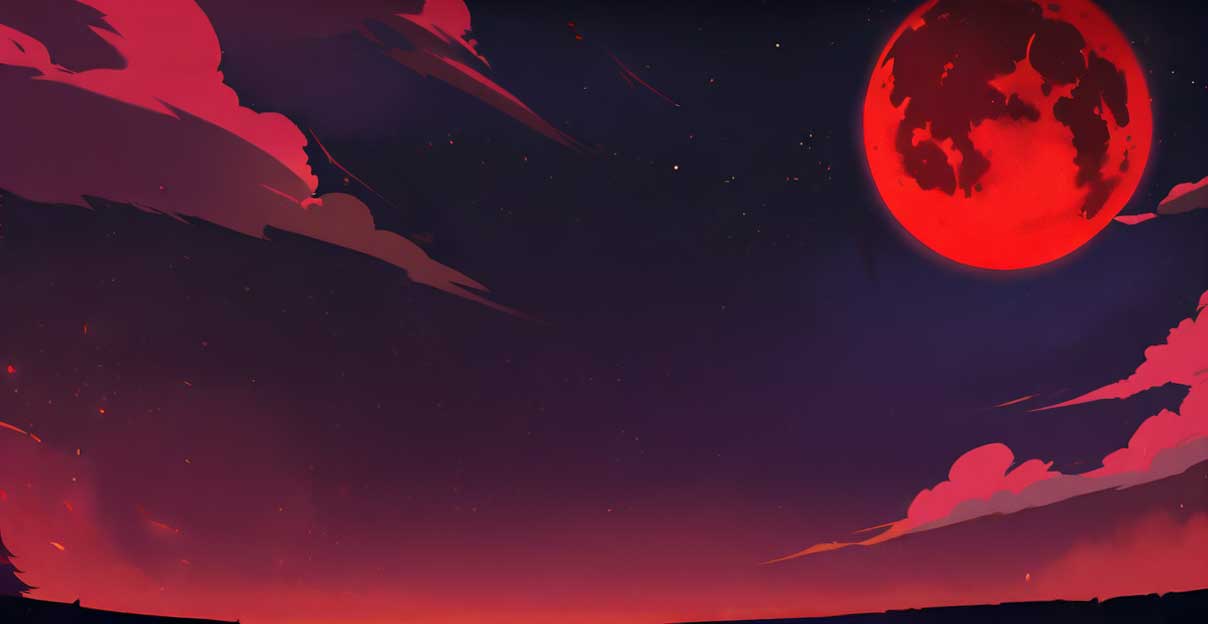
Meaning and Origin of the Name Vespera The name Vespera derives from the Latin word vesper, meaning “evening.” In ancient times, the term referred to the celestial body visible at twilight — the “evening star” — appearing when daylight fades but night has not yet fully taken hold. In classical tradition, this star corresponded to…