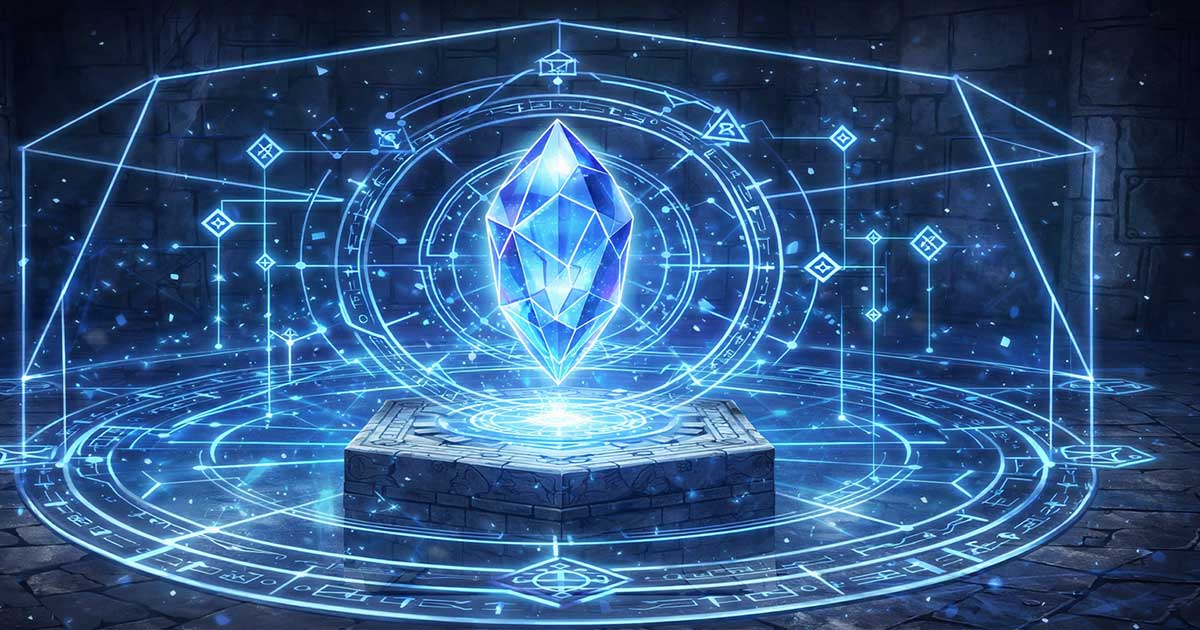

Magic System — Rules, limits, and power consistency
Magic system refers to the set of rules, limits, and principles that govern the use of the supernatural within a fictional universe. It is not merely about spectacular powers, but about an invisible framework that defines what is possible, what has a cost, and what cannot be broken without consequences. A well-designed magic system makes the extraordinary believable and gives weight to characters’ choices.
In fantasy and isekai narratives, this framework plays a central role in immersion. Magic without rules weakens tension; magic that is too rigid suffocates the story. Balance emerges through internal logic: the reader does not need to know everything, but must feel that every use follows a stable and consistent structure.
Magic systems interact closely with game mechanics. They shape skill evolution, frame power scaling, and stabilize power progression. Their true effectiveness, however, lies in narrative integration: every spell, ritual, or limitation must influence how conflicts are approached and resolved, while preserving narrative consistency.
Beyond individual characters, a magic system shapes worldbuilding. It defines social hierarchies, collective fears, institutions, and sometimes even economies. In a fantasy world, magic may be tied to heritage, training, magicules, or more abstract forces, giving rise to cultures and conflicts deeply rooted in the supernatural.
This section explores articles that examine magic systems as narrative pillars and structural foundations, revealing how their rules, limits, and uses shape characters, stakes, and the overall reading experience.
-

Building a Credible World Without Turning It into an Encyclopedia
Why Too Much Lore Hurts Worldbuilding Worldbuilding plays a central role in many fantasy and light novel narratives. However, when authors discover worldbuilding, many of them make the same mistake: they try to design everything, document everything, and explain everything before even beginning their story. This approach often results in hundreds of pages of notes,…
-

Worldbuilding Guide for Isekai
Worldbuilding Guide for Isekai: Building Another World Without Losing Narrative Tension The Core Principle: A Rule Revealed Through Failure A magic system should never be explained before it is experienced. Mini-scene 1 — The Rule Revealed Through Collapse The protagonist attempts to activate an inherited power for the first time.He has been told he is…
-

How to Avoid Inconsistent Magic Systems
Magic systems are at the core of worldbuilding in fantasy, light novels, and isekai. Yet many become inconsistent, weakening both narrative tension and the credibility of the story. Building a coherent magic system is not about making it realistic, but about ensuring narrative consistency, clarity, and integration within the broader world. Here is a clear…
-

The Relationship Between Power and Responsibility in a Narrative Universe
Power and Responsibility in Fantasy and Isekai: Building a Credible System In many fantasy stories, and especially in light novels and isekai, power occupies a central role. Magical power, political authority, military strength, or economic influence structure conflicts, alliances, and the evolution of characters. When a story grants extraordinary abilities to its characters without limits,…
-

The Optimal Structure of an Isekai: Conflict, Progression, and Revelation
An effective isekai does not rely solely on transporting the protagonist into another world. This starting point is a catalyst, not a narrative structure. Understanding the best structure for an isekai light novel means organizing three fundamental forces: conflict, progression, and revelation. In ISEKAI The Otherworlder’s Heir, this narrative architecture forms the backbone of the…
-

Fantasy Novels
Fantasy Novels: From Western Epic Sagas to Japanese Light Novel Worlds Yet behind this apparent unity lies a genre of remarkable richness. Fantasy has developed through multiple literary traditions: the great Western epic sagas on one side, and more recently the narrative universes shaped by Japanese light novels on the other. To understand modern fantasy…
-

Archetypes of Protagonists in Isekai
Archetypes of Protagonists in Isekai: From Fantasized Power to Moral Burden Isekai is not merely about changing worlds. It rests on a precise narrative promise: that of a protagonist placed in a radically new environment, where his abilities, choices, and responsibilities redefine his identity. In isekai light novels, this promise often takes the form of…
-

Mana and Aether: How Fantasy Reinvents the Sources of Magic
Mana and aether have become two central concepts in modern fantasy. Whether we are speaking about high fantasy, RPGs, or light novel isekai, these two terms structure a significant part of contemporary magic systems. But what do they actually mean?Is there an official definition?Are they interchangeable, or fundamentally different? In this article, we will compare…
-

Magical Systems in Isekai: Rules, Limits, and Narrative Stakes
In an isekai story, magic is never just background decoration. It structures the world, defines social hierarchies, shapes conflicts, and guides the protagonist’s arc. In a light novel, it also becomes a rhythmic engine: progression, revelations, limitations, and strategy. Understanding how to design a coherent magical system is essential for writing a strong and lasting…
-
Understanding the Difference Between Isekai and Fantasy
Isekai vs Fantasy: What Truly Sets Them Apart Confusion between isekai and fantasy is common, particularly when the isekai genre is first encountered through contemporary light novels. Yet the difference between isekai and fantasy is not merely a matter of vocabulary—it lies in the very structure of the narrative. Fantasy refers to a broad literary…