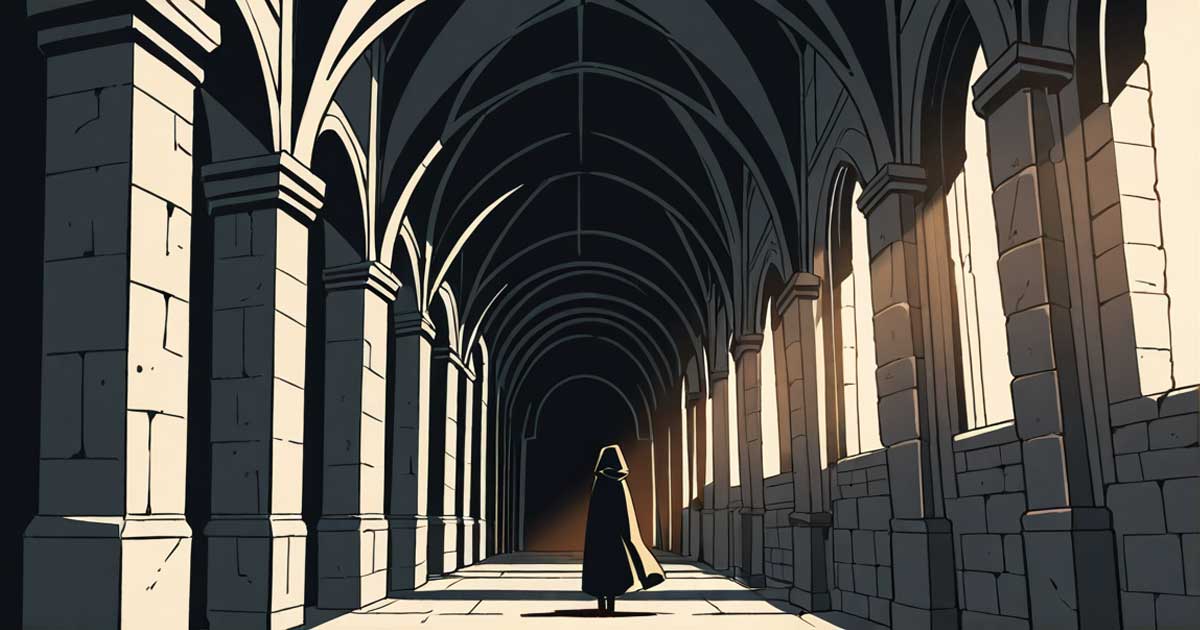

Narration — Voice, perspective, and delivery: how the story guides emotion and focus
Narration refers to the art of conveying a story, but also to the way that story is perceived, felt, and understood by the reader. It goes far beyond the mere sequencing of events, encompassing point of view, pacing, focalization, and narrative voice. A well-crafted narration guides attention, builds anticipation, and gives weight to narrative decisions.
Narration shapes the relationship between text and reader. It determines what is shown, what is suggested, and what is deliberately left unsaid. Work on narrative writing and narrative coherence helps maintain internal consistency, even when the story plays with ellipses, tonal shifts, or changes in perspective. Every narrative choice directly influences the reading experience.
In speculative fiction, narration is inseparable from the universe itself. Whether the story unfolds in a fantasy world, a parallel world, or within an isekai framework, the manner of telling conditions the reader’s suspension of disbelief. Worldbuilding and lore only gain meaning when they are woven into narration with precision, at the right moment and with the appropriate intensity.
Narration also governs rhythm and progression. It can accelerate action, slow down time, highlight character development, or deepen immersion. The choice of a light novel style, for instance, often favors fluid narration, focused on inner perspective and the efficiency of scenes.
This section examines narration as a central writing tool—its mechanisms, variations, and role in meaning-making—to better understand how a story takes shape, unfolds, and leaves a lasting impression on the reader.
-

Manga Adapted from a Light Novel: What Really Changes in the Narrative
Why do some manga adaptations of a Light Novel feel faster, more spectacular, yet sometimes less psychologically dense?Why do others successfully condense the story without weakening its emotional weight? The answer lies not in quality, but in structure. When a story moves from a textual system to a visual system, it undergoes a form of…
-

The Psychological Evolution of Arius Across the Volumes
Introduction — Fragility and Coherence in an Isekai Light Novel In a Light Novel, and especially in an isekai fantasy, character progression is often associated with rising power. Yet power alone does not create long-term reader attachment. What truly sustains engagement is psychological coherence. In this article, I examine Arius’s psychological evolution across the volumes,…
-
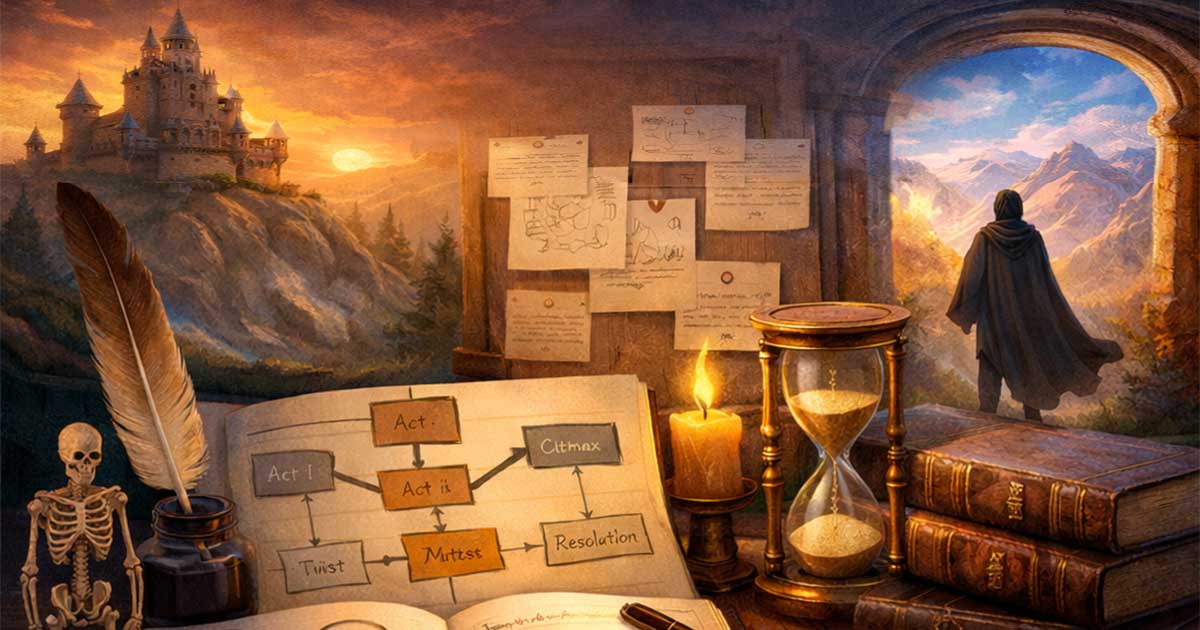
Writing a Fantasy Saga Differently: The Narrative Skeleton Before the Text
Before drafting the first line of a novel, it is possible to build the story as an architectural structure. This approach, which I call the narrative skeleton, consists of fixing the progression of events before telling them. It offers a structured way to plan a saga and to work on narrative arcs with a clear,…
-
What an Independent Author Can Build That No One Else Ever Will
When people talk about publishing, the discussion often focuses on visibility, distribution, or advertising. Traditional publishers undeniably have strong assets in this area: established networks, access to bookstores, sometimes even media exposure. It would be pointless to deny that. Yet this comparison overlooks a more fundamental reality: publishers and independent authors do not operate under…
-
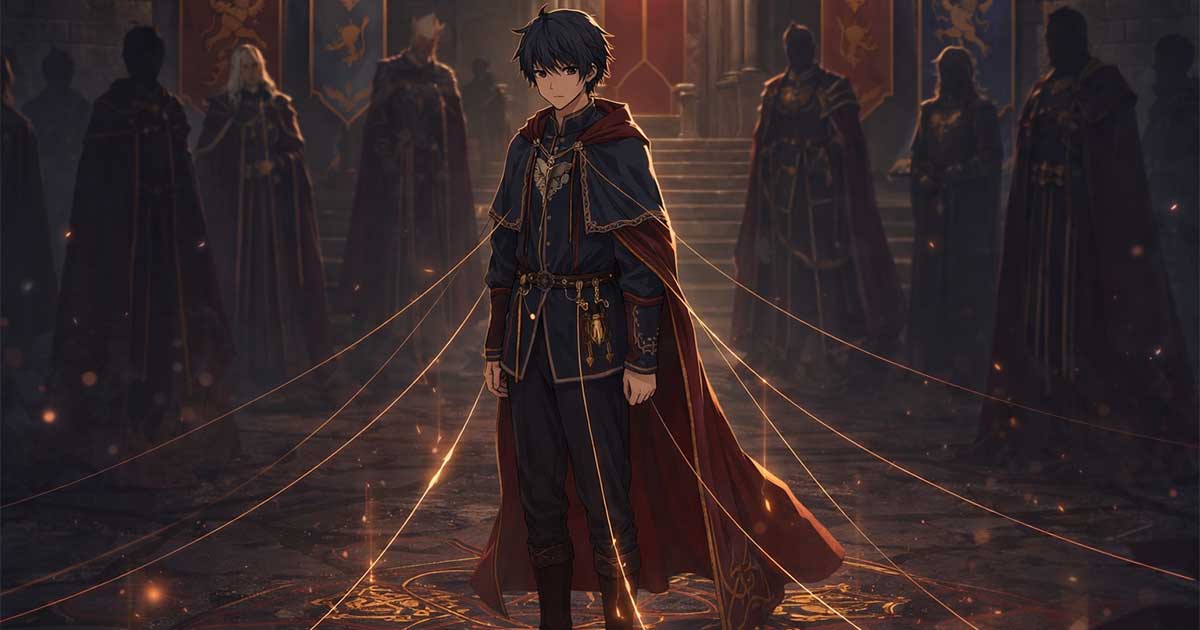
Lineage, Legacy, and Narrative Responsibility in an Isekai
Isekai worldbuilding, legacy, and power in fantasy In an isekai story, changing worlds does not always mean starting from nothing. Sometimes, the past is already waiting there—embedded in a name, a bloodline, or a lineage the world recognizes long before the protagonist understands its weight. This article explores lineage and legacy in isekai worldbuilding, not…
-
Common Mistakes When Writing an Isekai
Writing an isekai often feels deceptively easy. The genre is codified, popular, and extensively explored. Many beginner writers are drawn to it thinking that following a few formulas is enough to produce an effective story. In reality, it is precisely this apparent accessibility that makes it a particularly demanding field. The most common mistakes do…
-
The Structure of the Light Novel Explained: Arcs, Rhythm, and Serialization Logic
Why Do Some Isekai Sagas Endure… While Others Collapse? Why do some isekai series surpass ten volumes while maintaining narrative tension, while others lose momentum after only a few books? The answer rarely lies in the initial concept.It lies in the structure of the light novel. A light novel is a serialized novel of Japanese…
-

Japanese Narrative vs Western Narrative
Foundations and Narrative Framework Introduction The question of Japanese narrative versus Western narrative is not merely a matter of cultural contrast. It involves structural choices, a philosophy of storytelling, and a different relationship between author, character, and reader. In the context of light novels and, more specifically, isekai, this difference becomes not only visible, but…
-

Worldbuilding: Building a Coherent Universe Without Explaining Everything — Rules, Margins, and Invisible Decisions
Worldbuilding is one of the pillars of a coherent universe in fantasy and isekai. Building a believable world does not mean explaining everything, but establishing structuring rules, a stable internal logic, and invisible decisions that can support the story over time. In this article, I am not describing a specific universe. I am presenting a…
-
Publishing Is Not Just Writing: Building Editorial Coherence
Structuring an author’s presence is not simply a matter of publishing regularly. It requires an editorial line designed to hold over time, genuine respect for the reader, and solid organization—especially when publishing in two languages. This approach is neither spectacular nor immediately visible, yet it determines everything that follows. As you read these lines, several…