Tag: Light novel
A Japanese narrative format combining accessible prose, fast pacing, and serialization, often associated with fantasy, isekai, or adventure. Light novels emphasize character progression, immersion, and a balance between action, humor, and emotion.
-

The Author Website: Foundational Decisions and Embraced Independence
When visibility is discussed, many people think first of social media.This is a strategic mistake. Social networks are relays.The website, on the other hand, is the foundation. In a serious independent author’s approach, a website is not optional. It is the keystone of any long-term strategy — not because it is fashionable, but because it…
-
Why I Chose to Write an Isekai
Reader frustrations, authorial choice, and an assumed narrative framework Introduction — Why isekai naturally imposed itself I did not choose to write an isekai because it was fashionable.It imposed itself on me as the most natural response to my frustrations as a reader and to my ambitions as an author. Before writing, I spent a…
-
Understanding Kishōtenketsu in Light Novels
Why some Japanese stories do not revolve around conflict, but around a path Introduction When Western readers encounter a Japanese light novel — and even more so an isekai — they may experience a form of narrative dissonance that is difficult to articulate. The story seems to progress slowly. Certain scenes appear anecdotal. Important elements…
-
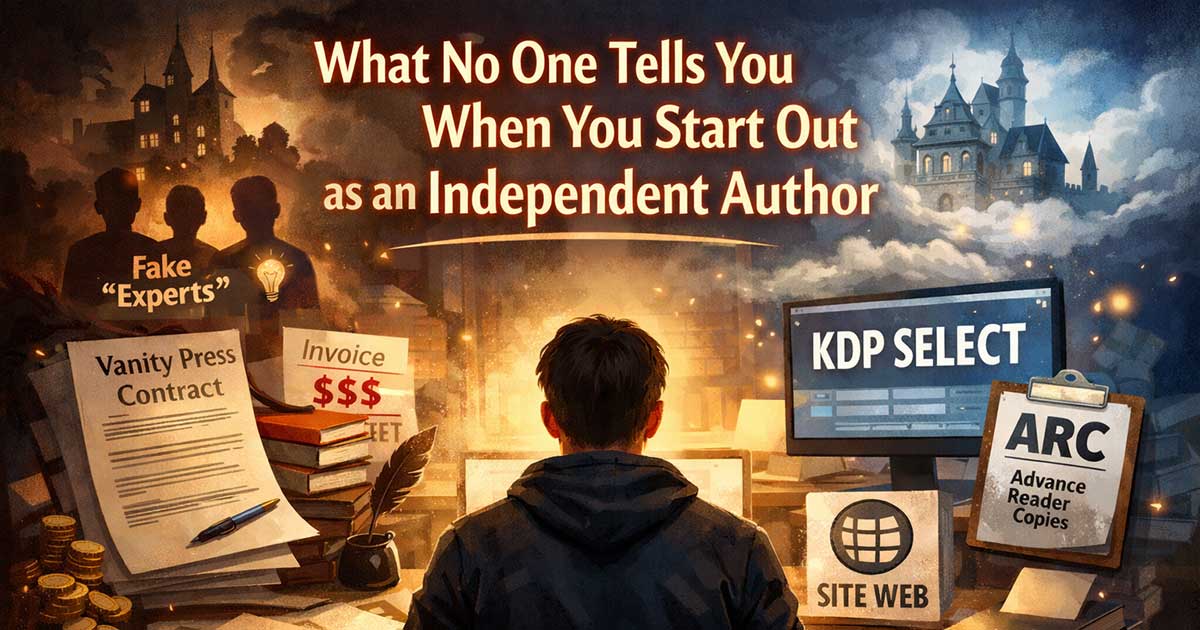
What No One Tells You When You Start Out as an Independent Author
When you start out as an independent author, you’re often driven by something simple: the desire to write, to publish, to be read. Naturally, you focus on the text, the story, the book. And that’s normal. It’s healthy. But very quickly, you discover another world—far less visible, rarely explained, yet decisive: the world of advice,…
-
Japanese Narrative vs Western Narrative
Foundations and Narrative Framework Introduction The question of Japanese narrative versus Western narrative is not merely a matter of cultural contrast. It involves structural choices, a philosophy of storytelling, and a different relationship between author, character, and reader. In the context of light novels and, more specifically, isekai, this difference becomes not only visible, but…
-
Worldbuilding: Building a Coherent Universe Without Explaining Everything — Rules, Margins, and Invisible Decisions
Worldbuilding is one of the pillars of a coherent universe in fantasy and isekai. Building a believable world does not mean explaining everything, but establishing structuring rules, a stable internal logic, and invisible decisions that can support the story over time. In this article, I am not describing a specific universe. I am presenting a…
-
Publishing Is Not Just Writing: Building Editorial Coherence
Structuring an author’s presence is not simply a matter of publishing regularly. It requires an editorial line designed to hold over time, genuine respect for the reader, and solid organization—especially when publishing in two languages. This approach is neither spectacular nor immediately visible, yet it determines everything that follows. As you read these lines, several…
-

Writing with Artificial Intelligence: Method and Limits
Method, Tone, and Tools Writing a light novel means constantly balancing emotion, coherence, and readability. Artificial intelligence helps me maintain that balance—without ever taking the pen from my hands. Writing Choices Writing is built on precise choices: level of language, tone, rhythm, and point of view. In a light novel, these elements are decisive. I…
-
How to Share Worldbuilding Without Drowning the Reader – Fantasy & Isekai Writing
Balance, pacing, and information delivery in fantasy and isekai Introductory Summary Building a rich universe is essential in fantasy and isekai, but poorly delivered worldbuilding can quickly weigh a story down. This article explores how to avoid infodumps, preserve narrative pacing, and transmit information organically—without sacrificing depth or coherence. Introduction — The Invisible Worldbuilding Trap…
-
Learning to Write: What You Don’t See at First
The 5% of Writing That Is Visible Writing is often thought of as style. In reality, style is only the tip of the iceberg. When I decided to start writing, I was aware of one thing: I possessed only a small fraction of the skills required. Perhaps five percent. The desire to tell a story,…