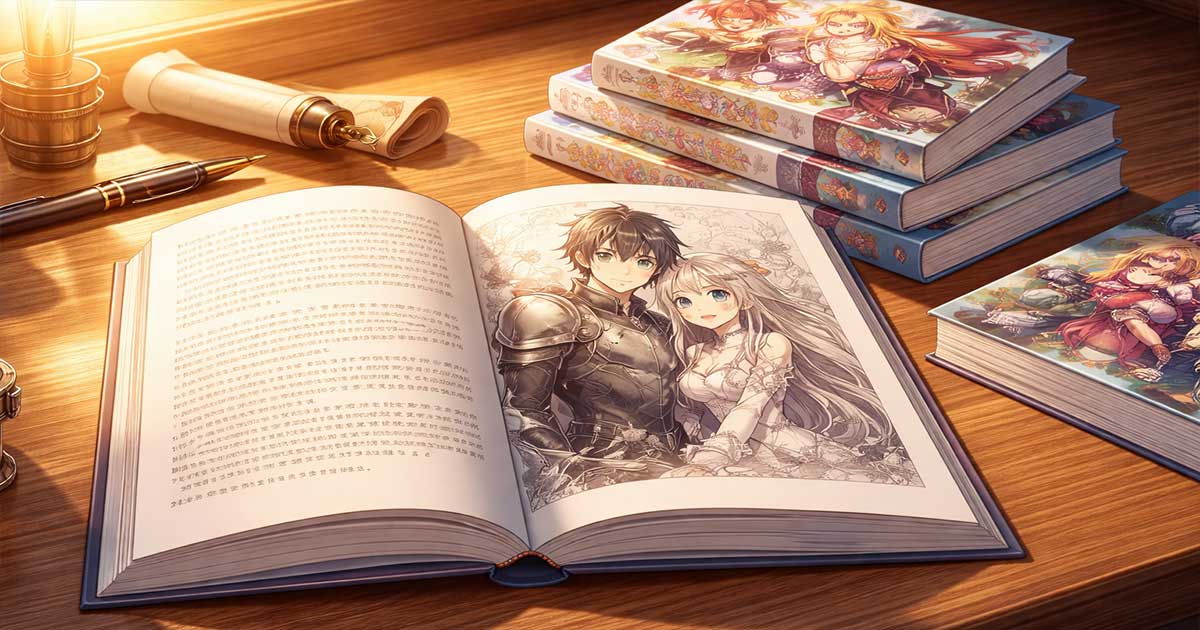

Light novel — Japanese narrative format blending prose, illustration, and serialized storytelling
The light novel refers to a Japanese narrative format situated at the crossroads of prose fiction, illustration, and serialization. It is characterized by a fluid writing style, strong readability, and a structure designed for progressive reading, often accompanied by illustrations that contribute to the work’s visual and narrative identity.
This format relies on a specific balance between narration, dialogue, and pacing. Texts favor clear progression, rapid immersion, and sustained attention to the reader’s experience. A light novel is therefore not defined solely by length or target audience, but by a distinct way of articulating story, structure, and narrative writing.
Light novels are closely connected to Japanese culture and belong to a broader narrative ecosystem in constant dialogue with manga and illustration. This proximity influences both thematic choices and the staging of characters, key scenes, and fictional worlds.
Many works of fantasy and isekai adopt the light novel format, whose serialized structure and narrative flexibility are particularly well suited to the exploration of complex worlds, gradual character development, and the construction of coherent systems.
This section brings together articles devoted to the light novel, examining its codes, uses, and narrative specificities. The associated texts explore the format as a full-fledged writing tool, capable of supporting immersive, structured, and sustainable storytelling.
-
Understanding the Difference Between Isekai and Fantasy
Isekai vs Fantasy: What Truly Sets Them Apart Confusion between isekai and fantasy is common, particularly when the isekai genre is first encountered through contemporary light novels. Yet the difference between isekai and fantasy is not merely a matter of vocabulary—it lies in the very structure of the narrative. Fantasy refers to a broad literary…
-
5 Common Mistakes When Writing an Isekai (And Why Most Stories Fail)
Writing an isekai often feels deceptively easy. The genre is codified, popular, and extensively explored. Many beginner writers are drawn to it thinking that following a few formulas is enough to produce an effective story. In reality, it is precisely this apparent accessibility that makes it a particularly demanding field. The most common mistakes do…
-
How to Write a Light Novel: From Concept to Volume Structure
Most light novel projects fail not because of style, but because of structure. Writing a light novel is not about telling a simplified long story. It is a precise architecture, designed for serialization, emotional progression, and sustained tension. Pasted text When applied to the isekai fantasy genre, every structural decision becomes even more strategic: the…
-

Why Light Novels Emphasize Action and Inner Monologue
Light novels often prioritize action and inner monologue, a narrative choice that frequently puzzles readers accustomed to Western fantasy novels. This orientation is sometimes perceived as a simplification of writing or a stylistic weakness. In reality, it rests on a coherent narrative logic, closely tied to the structure of the medium and the reading experience…
-
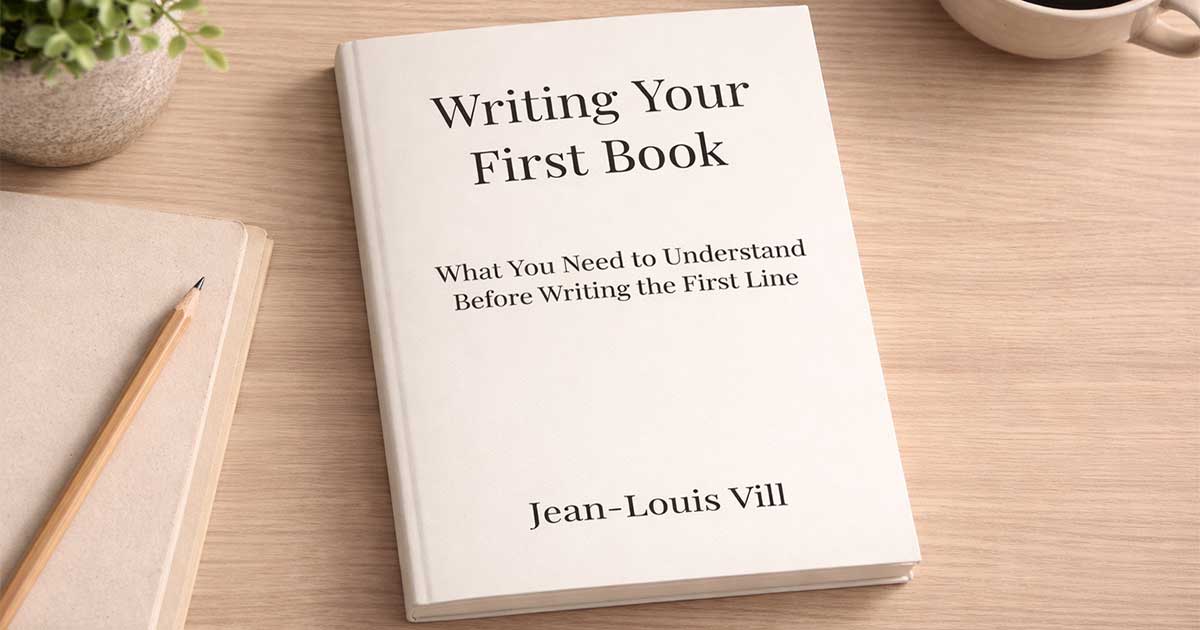
Writing Your First Book: What You Need to Understand Before You Begin
An essential guide to understanding the key decisions behind writing a first book — and avoiding structural mistakes that can compromise a project from the start. Writing a book begins long before the first line. Before style, inspiration, or motivation, there are fundamental decisions that shape the entire project: the type of book, the intended…
-
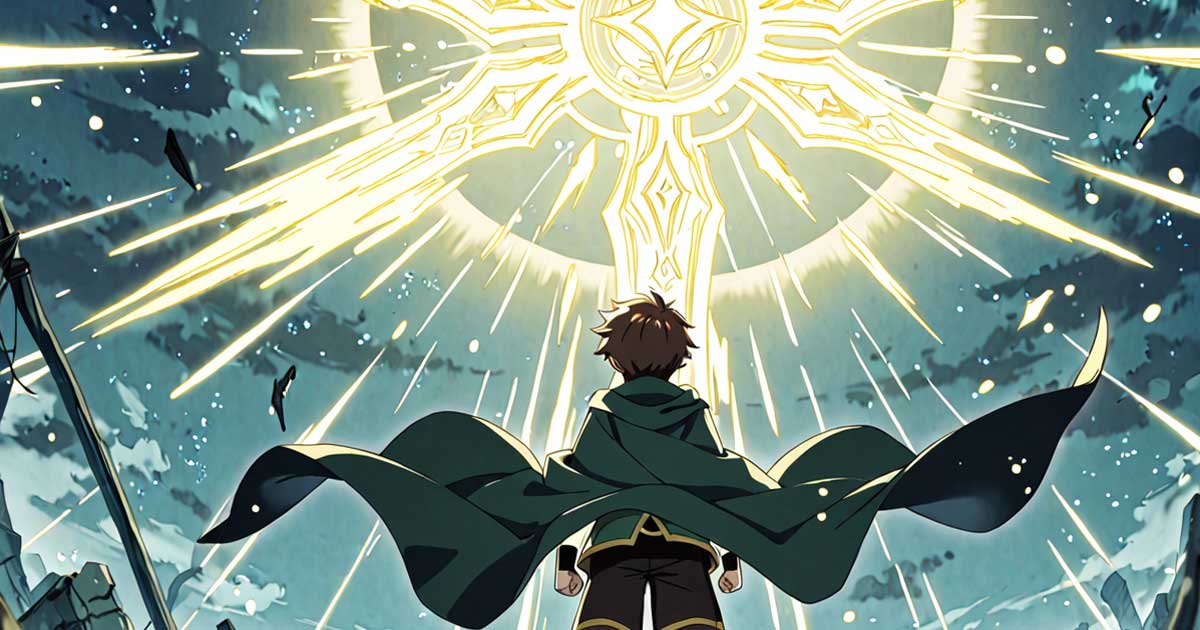
The Notion of Merit in the Transmission of Power in Arius Lovelace
Introduction In many fantasy narratives—and even more so in isekai—the transmission of power rests on an implicit principle: to receive is to be worthy. The protagonist inherits exceptional abilities, sometimes upon arrival in a new world, and their legitimacy is rarely questioned. The universe of ISEKAI The Otherworlder’s Heir adopts a different stance. It draws…
-
Why Some Light Novels Last (Arcs, Pacing, and Long-Term Structure)
Why Do Some Isekai Sagas Endure… While Others Collapse? Why do some isekai series surpass ten volumes while maintaining narrative tension, while others lose momentum after only a few books? The answer rarely lies in the initial concept.It lies in the structure of the light novel. A light novel is a serialized novel of Japanese…
-
The Weight of Legacy in Arius Lovelace
Psychological and Narrative Analysis of an Isekai Character Introduction Legacy as a Foundational Injustice Certain responsibilities arrive too early, often at a moment when the individual has neither the distance nor the perspective necessary to understand their implications. This imbalance installs a lasting sense of injustice. Vulnerability and the Obsession with Strength The experience of…
-

What I Didn’t Know Before Writing My First Volume
(and why I still had to start anyway) Writing a book often begins with a contradiction. On the one hand, you feel you have an idea, a direction, something to say.On the other, you know perfectly well you’re not ready. Not really. Not technically. Not methodologically. When I started writing my first volume, I very…
-
The Central Role of Progression in Light Novels
When discussing light novels, one concept comes up again and again—sometimes without being clearly named: progression.Many readers feel it instinctively, without always being able to define it. Yet it lies at the very heart of what makes the genre work, and even more so when it comes to isekai. Progression in Light Novels: More Than…