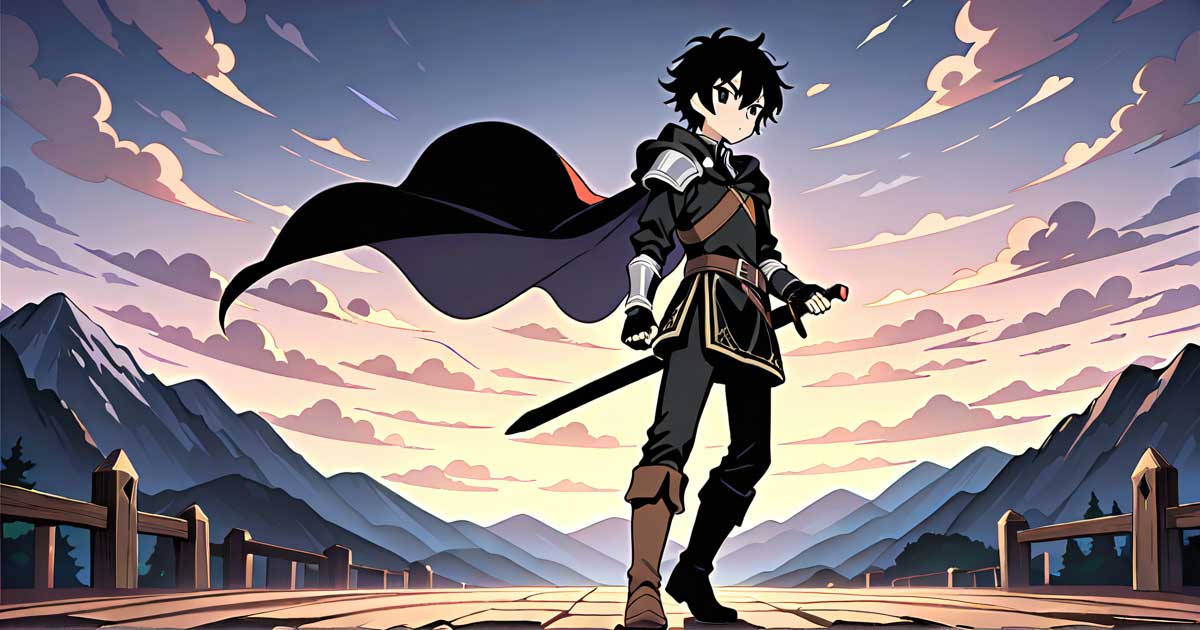

Isekai protagonist — Second chances and a fresh lens
The isekai protagonist holds a distinctive place in contemporary fiction. Torn from their original world and thrust into a reality governed by unfamiliar rules, they become both the reader’s anchor and a lens through which the new world is discovered. Their often disoriented perspective allows fantasy to unfold not as a static backdrop, but as a space to explore, understand, and sometimes challenge.
In isekai narratives, the protagonist is not merely a hero in the making. They carry memories, habits, and cultural references from another world, naturally generating narrative tension. Every rule uncovered, every ability acquired, every limitation imposed strengthens immersion, as the reader learns alongside the character. This shared discovery is one of the genre’s strongest tools for identification.
The construction of an isekai protagonist often relies on a delicate balance between progression and vulnerability. Their rise in power is framed by explicit or implicit game mechanics, which structure the evolution of skills and overall power progression. Yet this growth only matters if it reshapes the character’s choices, relationships, worldview, and role within the conflicts that surround them.
The isekai protagonist is also a central tool for worldbuilding. Through their initial ignorance, they reveal the structures of the fantasy world, its implicit laws, hierarchies, and myths. Their reactions to magic, creatures, or institutions make it possible to explore narrative consistency without direct exposition, weaving the rules of the world into action and moral dilemmas.
This section brings together articles focused on the isekai protagonist, their construction, evolution, and narrative function, offering insight into how this type of character shapes the reading experience and provides long-term structure to portal fantasy narratives.
-

Can You Write a Light Novel in the West Without Losing Its Essence?
The global popularity of light novels, especially within fantasy and isekai settings, raises an increasingly common question among Western authors: Is it possible to write a light novel in the West without losing what makes the genre unique? At first glance, the answer may seem obvious. The narrative codes are visible, the tropes are recognizable,…
-

The Narrative Style of the Light Novel: Inner Voice, Intimacy, and Reader Alignment
The light novel is not merely an editorial format. It is a narrative stance. A direct relationship with the reader. A deliberately embraced sense of proximity. A mode of writing that favors inner voice, immediate emotion, and the gradual alignment between protagonist and audience. In ISEKAI The Otherworlder’s Heir, this principle is fully embraced. The…
-

Authority Figures in Fantasy Light Novels
Authority Figures in ISEKAI The Otherworlder’s Heir In many fantasy and isekai light novel stories, a protagonist’s development does not rely solely on adventure or the acquisition of new powers. It often depends on a network of authority figures that shape the hero’s psychology, values, and place in the world. These figures go beyond the…
-

Writing Light Novel Dialogue: Efficiency, Subtext, and Emotional Impact
In a light novel, dialogue is not narrative filler.In an isekai, it becomes a lens for cultural dissonance.In fantasy, it shapes power dynamics. In ISEKAI The Otherworlder’s Heir, every exchange is designed as a miniature dramatic confrontation, even when it appears light on the surface. Here is how. Subtext: What Is Left Unsaid Creates Tension…
-

The Optimal Structure of an Isekai: Conflict, Progression, and Revelation
An effective isekai does not rely solely on transporting the protagonist into another world. This starting point is a catalyst, not a narrative structure. Understanding the best structure for an isekai light novel means organizing three fundamental forces: conflict, progression, and revelation. In ISEKAI The Otherworlder’s Heir, this narrative architecture forms the backbone of the…
-

Writing a Child Protagonist Without Infantilizing Them
In many light novels, especially in isekai and fantasy stories, choosing a child as the protagonist is not merely a narrative gimmick. It follows a specific narrative logic: showing the formation of a consciousness, allowing the reader to witness the evolution of a character before their personality has fully crystallized. This approach differs from certain…
-

Archetypes of Protagonists in Isekai
Archetypes of Protagonists in Isekai: From Fantasized Power to Moral Burden Isekai is not merely about changing worlds. It rests on a precise narrative promise: that of a protagonist placed in a radically new environment, where his abilities, choices, and responsibilities redefine his identity. In isekai light novels, this promise often takes the form of…
-

Magical Systems in Isekai: Rules, Limits, and Narrative Stakes
In an isekai story, magic is never just background decoration. It structures the world, defines social hierarchies, shapes conflicts, and guides the protagonist’s arc. In a light novel, it also becomes a rhythmic engine: progression, revelations, limitations, and strategy. Understanding how to design a coherent magical system is essential for writing a strong and lasting…
-

The Psychological Evolution of Arius Across the Volumes
Introduction — Fragility and Coherence in an Isekai Light Novel In a Light Novel, and especially in an isekai fantasy, character progression is often associated with rising power. Yet power alone does not create long-term reader attachment. What truly sustains engagement is psychological coherence. In this article, I examine Arius’s psychological evolution across the volumes,…
-
Understanding the Difference Between Isekai and Fantasy
Isekai vs Fantasy: What Truly Sets Them Apart Confusion between isekai and fantasy is common, particularly when the isekai genre is first encountered through contemporary light novels. Yet the difference between isekai and fantasy is not merely a matter of vocabulary—it lies in the very structure of the narrative. Fantasy refers to a broad literary…