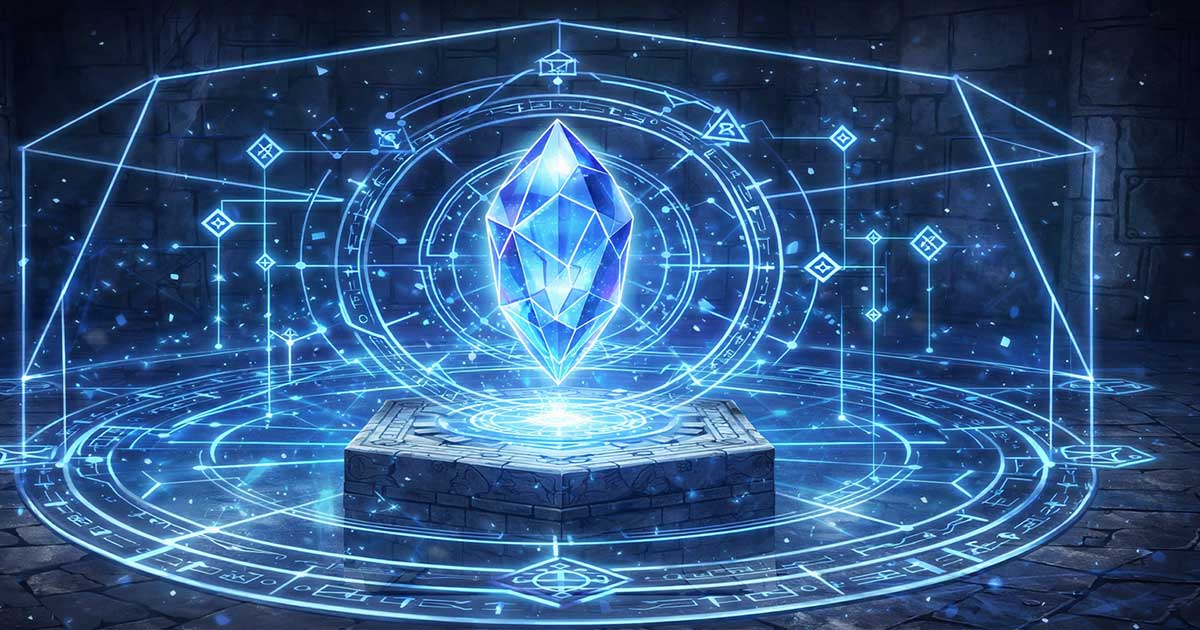

Magic-System — Rules, limits, and power consistency
Magic system refers to the set of rules, limits, and principles that govern the use of the supernatural within a fictional universe. It is not merely about spectacular powers, but about an invisible framework that defines what is possible, what has a cost, and what cannot be broken without consequences. A well-designed magic system makes the extraordinary believable and gives weight to characters’ choices.
In fantasy and isekai narratives, this framework plays a central role in immersion. Magic without rules weakens tension; magic that is too rigid suffocates the story. Balance emerges through internal logic: the reader does not need to know everything, but must feel that every use follows a stable and consistent structure.
Magic systems interact closely with game mechanics. They shape skill evolution, frame power scaling, and stabilize power progression. Their true effectiveness, however, lies in narrative integration: every spell, ritual, or limitation must influence how conflicts are approached and resolved, while preserving narrative consistency.
Beyond individual characters, a magic system shapes worldbuilding. It defines social hierarchies, collective fears, institutions, and sometimes even economies. In a fantasy world, magic may be tied to heritage, training, magicules, or more abstract forces, giving rise to cultures and conflicts deeply rooted in the supernatural.
This section explores articles that examine magic systems as narrative pillars and structural foundations, revealing how their rules, limits, and uses shape characters, stakes, and the overall reading experience.
-

Magical Systems in Isekai: Rules, Limits, and Narrative Stakes
In an isekai story, magic is never just background decoration. It structures the world, defines social hierarchies, shapes conflicts, and guides the protagonist’s arc. In a light novel, it also becomes a rhythmic engine: progression, revelations, limitations, and strategy. Understanding how to design a coherent magical system is essential for writing a strong and lasting…
-
Understanding the Difference Between Isekai and Fantasy
Isekai vs Fantasy: What Truly Sets Them Apart Confusion between isekai and fantasy is common, particularly when the isekai genre is first encountered through contemporary light novels. Yet the difference between isekai and fantasy is not merely a matter of vocabulary—it lies in the very structure of the narrative. Fantasy refers to a broad literary…
-
How to Write a Light Novel: From Concept to Volume Structure
Most light novel projects fail not because of style, but because of structure. Writing a light novel is not about telling a simplified long story. It is a precise architecture, designed for serialization, emotional progression, and sustained tension. Pasted text When applied to the isekai fantasy genre, every structural decision becomes even more strategic: the…
-
Vespera — The Red Moon
Meaning and Origin of the Name Vespera The name Vespera derives from the Latin word vesper, meaning “evening.” In ancient times, the term referred to the celestial body visible at twilight — the “evening star” — appearing when daylight fades but night has not yet fully taken hold. In classical tradition, this star corresponded to…
-
What Is an Isekai? Definition, Origins, and Genre Tropes
Isekai is one of the most popular genres in modern Japanese storytelling, spanning manga, light novels, and anime. It features a protagonist who is transported, summoned, or reincarnated into another world—often radically different from our own. Since the 2010s, isekai has experienced a spectacular rise. Sword Art Online, Re:Zero, Mushoku Tensei, Overlord—these titles pushed the…